A small kitchen asks more of the design than a large one. There’s less room to hide poor decisions, and every choice about layout, storage, and finish has a direct effect on how the space feels to use every day. Get it right, and a compact kitchen can be genuinely impressive. Get it wrong, and it will feel cluttered and frustrating within weeks.
Start with the layout, not the look
The most common mistake in small kitchen design is focusing on finishes before the layout is resolved. Colour and cabinetry style matter, but they won’t fix a workflow that doesn’t work. Before anything else, think about where you prepare food, where you cook, and where you wash up, and whether those three zones connect logically.
In a galley kitchen, the classic arrangement puts the sink and preparation area on one side and the hob and oven on the other. This keeps the cooking triangle tight without the two sides getting in each other’s way. In an L-shaped layout, the corner is often wasted unless it’s handled properly with a pull-out carousel or a deep drawer unit designed for that specific space.
If you’re working with a single run of units, keep the hob away from the end of the run so there’s worktop on both sides of it. That one decision makes cooking significantly more practical
Use cabinetry height to your advantage
In a small kitchen, running wall units to ceiling height is one of the most effective things you can do. It draws the eye upward, which makes the room feel taller, and it adds a meaningful amount of storage without taking up any floor space. The upper shelves are best used for things you don’t need every day: serving dishes, large pots, seasonal items.
If full-height cabinetry feels too heavy for the room, consider running wall units to a consistent height and leaving the space above open. A painted reveal between the top of the units and the ceiling, finished in the same colour as the cabinetry, can look very clean and intentional rather than unfinished.
Avoid mixing unit heights arbitrarily. Inconsistency in cabinetry height makes a small kitchen feel busier than it is. A single consistent line across the top of your wall units brings order to the space.
Choose materials that don’t compete with each other
In a larger kitchen, you can introduce more variety across worktops, splashbacks, and cabinetry without the room feeling chaotic. In a small kitchen, restraint is more important. Two or three materials, chosen carefully and used consistently, will almost always look better than five or six.
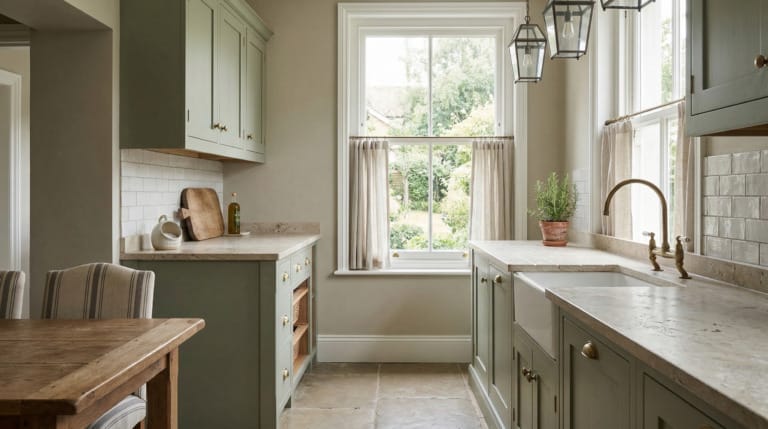
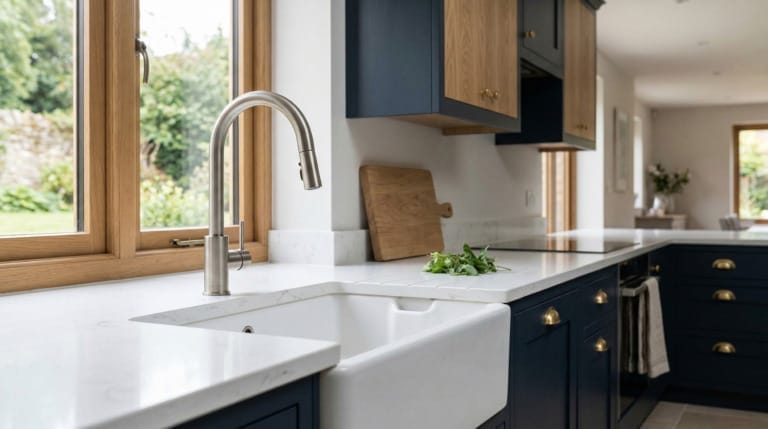
A painted cabinet with a stone or quartz worktop and a simple tiled splashback is a combination that works because each element has a clear role. The cabinetry provides the colour, the worktop provides the texture and weight, and the splashback connects the two without introducing a third competing material.
Matt finishes tend to work better than gloss in compact spaces. Gloss reflects light, which can feel bright and open in theory, but in practice it also reflects clutter, fingerprints, and the walls behind you. A well-chosen matt paint or lacquer finish reads as quieter and more considered.
Think carefully about what you put on show
Open shelving is often suggested as a way to make a small kitchen feel more open, and it can work well. But it only works if what’s on the shelves is genuinely worth looking at and you’re prepared to keep it tidy. A run of mismatched mugs and half-used condiment bottles will make the space feel smaller, not larger.
If you want open shelving, be selective. One or two shelves above a worktop run, used for a small number of consistent items, can look very good. Glasses, a few pieces of pottery, or a small collection of cookbooks all work. The key is editing, both when you design the kitchen and in how you use it afterwards.
For everything else, closed storage is almost always the better choice in a small kitchen. Deep drawers for pots and pans, pull-out larder units for dry goods, and integrated appliances behind cabinet doors all keep the visual noise down and make the space feel calmer

Handle lighting in layers
A single ceiling light is rarely enough in any kitchen, but in a small one it’s particularly limiting. Overhead lighting creates flat, even illumination that doesn’t distinguish between the worktop where you’re working and the rest of the room. It also can cast shadows exactly where you don’t want them.
Under-cabinet lighting is one of the most practical additions you can make. It puts light directly onto the worktop surface, which is where you need it most, and it adds a sense of depth to the room without taking up any space. LED strip lighting recessed into the underside of wall units is clean and unobtrusive when done properly.
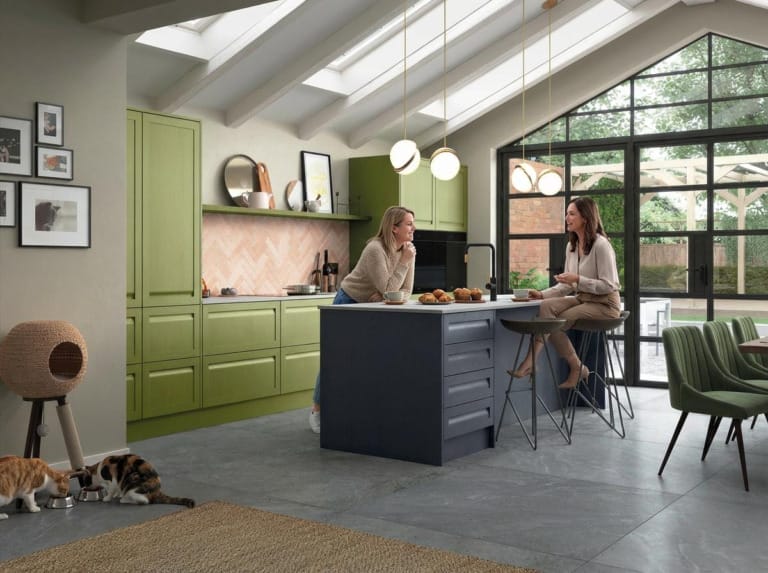
If the kitchen has a dining area or a peninsula, a pendant or two above it will help define that zone and add a layer of warmth that purely functional lighting doesn’t provide. The scale of the pendant matters in a small space: something too large will overwhelm the room, and something too small will look like an afterthought.
Make the most of every awkward corner and gap
Small kitchens often have spaces that feel like problems: the gap at the end of a run of units, the corner where two runs meet, the narrow section beside the fridge. These are worth thinking about carefully rather than accepting as dead space.
A tall pull-out unit in a 150mm or 200mm gap beside a fridge or cooker can hold oils, spices, and condiments in a way that keeps them accessible without cluttering the worktop. A corner unit with a full-extension pull-out carousel makes that otherwise awkward space genuinely usable. Even the plinth at the base of your units can be fitted with shallow drawers for baking trays and chopping boards.
None of these solutions are complicated, but they do need to be designed in from the start. Retrofitting storage into a kitchen that wasn’t planned with it in mind is always harder and usually less effective

How Mastercraft approaches this
When we design a small kitchen, we start by mapping out how the space will actually be used. That means understanding your cooking habits, how many people use the kitchen at once, whether you need a breakfast area, and what appliances matter most to you. The layout comes from those answers, not from a template.
We pay close attention to proportion in compact spaces. The height of wall units relative to base units, the depth of the worktop overhang, the width of door profiles on in-frame cabinetry: these details have a significant effect on how a small kitchen reads, and getting them right requires experience rather than guesswork. A door that’s slightly too wide, or a wall unit that sits a fraction too low, can make a well-planned kitchen feel off without the reason being immediately obvious.
Every Mastercraft kitchen is designed and built for the specific room it goes into. In a small kitchen, that matters more than anywhere else. There are no standard carcass sizes forced into a space that doesn’t quite suit them, and no compromises made because a particular unit doesn’t come in the right dimension. The kitchen is made to fit the room, not the other way around.
Explore more from Mastercraft Kitchens
If you’re planning a kitchen project and would like to see what’s possible in your area, you can find out more about our work here:
- fitted kitchens in Heswall
- fitted kitchens in Manchester
- fitted kitchens in Harrogate
- fitted kitchens in Bromsgrove
- fitted kitchens in Wirral
- bespoke kitchens in Yorkshire
If you’d like to talk through your kitchen with one of our designers, we’re happy to arrange a consultation at a time that suits you. There’s no pressure and no obligation, just a straightforward conversation about what you’re hoping to achieve.
Frequently asked questions
Can a small kitchen really have enough storage without feeling cramped?
Yes, but it depends on how the storage is designed rather than how much cabinetry you fit in. Deep drawers, pull-out larder units, and full-height cabinetry all add meaningful capacity without making the room feel busier. The goal is to keep as much as possible behind closed doors so the worktop and visible surfaces stay clear.
Is it worth fitting integrated appliances in a small kitchen?
In most cases, yes. Integrated appliances sit behind cabinet doors, which keeps the visual line of the kitchen consistent and reduces the number of different materials and finishes competing for attention. In a small space, that visual calm makes a real difference to how the room feels.
What worktop material works best in a compact kitchen?
Quartz and honed stone both work well because they’re durable, easy to maintain, and available in colours that complement painted cabinetry without overwhelming the room. A single consistent worktop run, without too many joins or changes in material, will always look cleaner than a patchwork of different surfaces.
Should I use light colours in a small kitchen to make it feel bigger?
Light colours do help, but they’re not the only option. A darker cabinetry colour used consistently, with good lighting and a lighter worktop, can feel very considered in a small kitchen without making it feel enclosed. What matters more than the specific colour is keeping the palette simple and avoiding too many contrasting tones.
How do I make a small kitchen feel more individual without it looking busy?
The detail is usually in the cabinetry itself rather than in added decoration. An in-frame door with a well-proportioned profile, a carefully chosen handle, or a painted colour that’s specific to the room will give the kitchen character without adding visual clutter. Restraint in the number of materials and finishes is what allows those details to read clearly.