How to Design a Pantry or Breakfast Cupboard That Actually Works
Why this matters in your kitchen
Your pantry or breakfast cupboard handles more daily activity than almost any other storage space in your kitchen. You reach into it multiple times each day for ingredients, snacks, breakfast items and small appliances. Yet most pantries fail because they treat storage as an afterthought rather than a carefully planned system.
A well-designed pantry reduces the time you spend searching for items, keeps food fresher for longer, and prevents the frustrating pile-up of half-used packets and forgotten purchases. The difference between a functional pantry and a chaotic one comes down to understanding how you actually use the space and designing the interior accordingly.
How this part of the design works in daily use
Your pantry needs to work as a series of organised zones, each dedicated to specific types of items. The breakfast zone holds cereals, spreads and morning essentials at eye level. The cooking zone keeps oils, vinegars, spices and baking ingredients within easy reach. The bulk storage zone accommodates larger items like pasta, rice and tinned goods.
This zoning approach means you can find what you need without moving other items or searching through cluttered shelves. When you’re making breakfast, everything you need sits in one area. When you’re cooking dinner, your ingredients occupy their own dedicated space.
The key is matching shelf heights to the items they’ll hold. Standard fixed shelving forces you to waste vertical space or stack items awkwardly. Adjustable shelving lets you create the right height for cereal boxes, preserve jars, or small appliances without compromising accessibility.

Practical design rules to get right
Start with shelf spacing that matches your storage needs. Cereal boxes and large jars need 32-35cm of vertical clearance. Tinned goods work well with 18-20cm spacing. Small jars and spice containers only need 12-15cm.
Plan your shelving depths carefully. Deep shelves create dead space at the back where items get lost. For most pantry items, 30-35cm depth provides enough storage without making items unreachable. Reserve deeper shelves for bulky items you access less frequently.
Position your most-used items between waist and eye level – roughly 90-160cm from the floor. This prime real estate should hold your daily breakfast items, cooking oils, and frequently used ingredients. Less common items can go on higher or lower shelves.
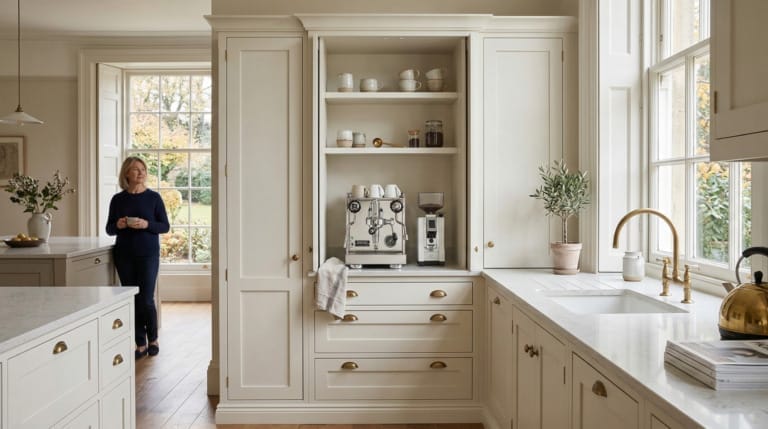
Small appliances need their own dedicated space with appropriate electrical provision. A coffee machine, toaster, or food processor requires a shelf strong enough to support the weight, with sufficient clearance above for operation. Plan for power outlets within the pantry rather than trailing leads to external sockets.
Consider pull-out drawers for the lower section of your pantry. Deep base storage works better as drawers because you can see and reach everything without kneeling or moving items at the front.
Common mistakes to avoid
The biggest mistake is designing your pantry around standard shelf positions rather than your actual storage needs. Fixed shelving at regular intervals creates awkward gaps and wasted space. You end up with shelves too high for jam jars and too low for cereal boxes.
Many pantries fail because they’re too deep. A 60cm deep pantry might seem like good value for storage space, but items at the back become inaccessible. You’ll forget what you have and end up buying duplicates while perfectly good food expires unseen.
Poor lighting turns even a well-organised pantry into a frustrating experience. Internal lighting should illuminate all shelves clearly, not just the front edge. LED strip lighting or internal spotlights make a significant difference to usability.
Ignoring door clearance causes daily annoyance. Your pantry door needs to open fully without hitting other kitchen elements. If space is tight, consider bi-fold doors or internal sliding mechanisms that don’t require swing space.

How bespoke design improves the result
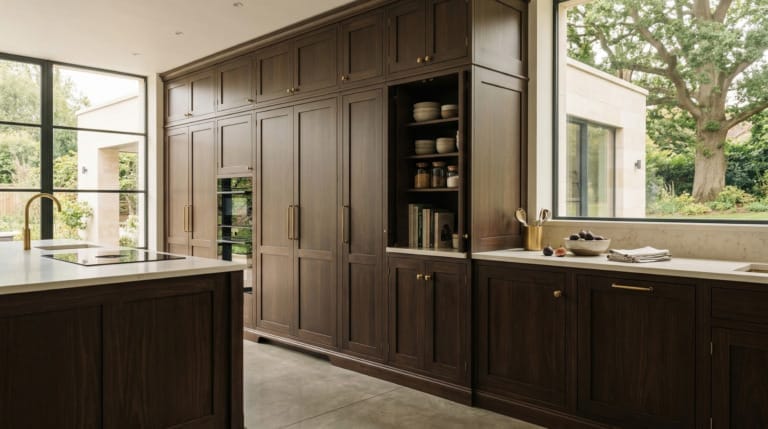
Bespoke pantry design starts with understanding exactly what you need to store and how you use different items. We can create shelf spacing that matches your specific requirements rather than forcing you to adapt to standard dimensions.
Custom internal fittings make a significant difference to functionality. Pull-out spice racks, tilt-out vegetable bins, and integrated small appliance stations all improve daily usability. These elements need to be planned into the design from the start, not added as afterthoughts.
The quality of internal hardware matters more in pantries than in most other kitchen storage. Adjustable shelf supports need to hold weight reliably over years of use. Drawer runners must operate smoothly even when fully loaded. Cheap fittings create ongoing frustration and eventual failure.
Bespoke design also addresses the specific constraints of your kitchen layout. We can design around awkward ceiling heights, work with unusual wall angles, or integrate the pantry with adjacent cabinetry for a cohesive appearance.
Making your pantry work for you
Your pantry should feel like an organised extension of your kitchen workspace, not a separate storage room where things get forgotten. The best pantries make it easy to see what you have, reach what you need, and maintain organisation over time.
Focus on creating a system that matches your cooking and eating habits. If you bake regularly, dedicate space for flour, sugar and baking equipment. If you drink coffee every morning, position your machine and supplies for easy access. The design should support your routine, not fight against it.
Remember that a pantry is only as good as its organisation system. Even the best-designed storage space needs regular attention to maintain its effectiveness. Plan for this from the start by creating clear zones and logical groupings that make sense to you.
Frequently asked questions
What is the difference between a pantry and a breakfast cupboard?
A pantry is usually designed for dry food storage and organisation, while a breakfast cupboard often houses small appliances such as coffee machines, toasters and kettles behind doors.
How deep should pantry shelves be?
Shelves around 300mm to 400mm deep usually work best. If shelves are too deep items disappear at the back and become difficult to use.
Do breakfast cupboards need sockets?
Yes. If the cupboard is used for appliances such as coffee machines or toasters, sockets and ventilation should be planned into the cabinetry from the start.
Are pull-out shelves better than fixed shelves?
Pull-out shelves can make heavier items easier to reach, while fixed shelves work well for dry goods and taller storage.
What makes a pantry cupboard practical?
Good pantry design focuses on visibility and access. Shelf spacing, lighting, appliance space and clear storage zones make the cupboard genuinely useful.