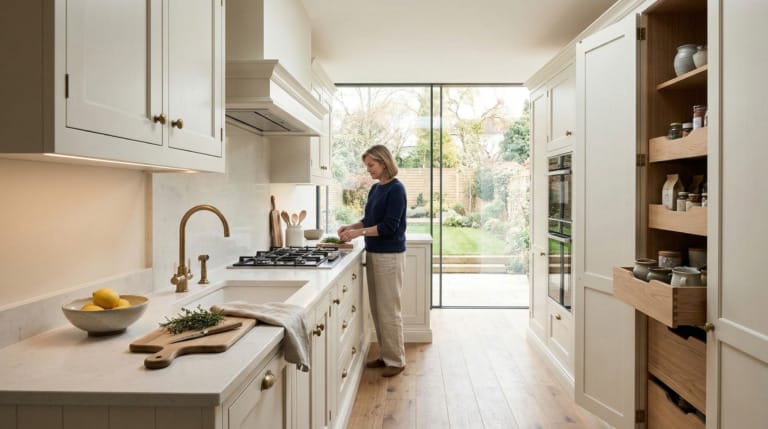
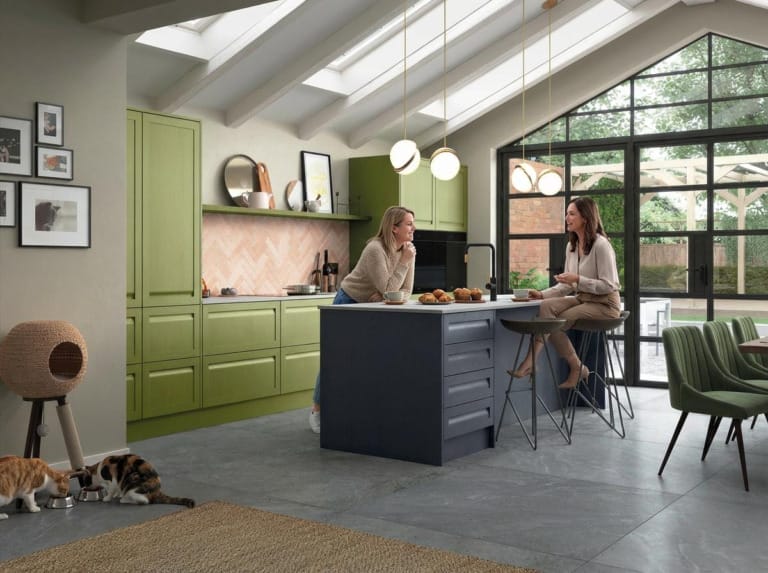
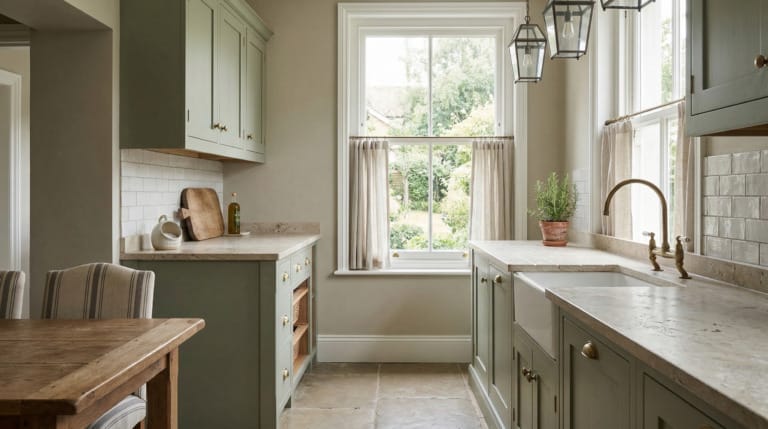
A tap is one of the hardest-working things in your kitchen, yet it’s usually one of the last decisions made. That’s a mistake worth avoiding. Getting the tap right means thinking about your sink, your water system, your worktop height, and how you actually use the space.
Start with your water system, not the style
Before you fall for a particular finish or profile, you need to know what water system you have. This is the single most common reason a chosen tap turns out to be incompatible once it arrives.
Most UK homes have either a combi boiler with mains-pressure hot water, a gravity-fed system with a cold water tank in the loft, or an unvented cylinder. The pressure and flow rate vary considerably between them, and not every tap performs well across all three. Some taps — particularly those with ceramic cartridges — need a minimum pressure to operate properly.
If you have a gravity-fed system and lower pressure, look for taps that are specifically rated for low-pressure use, or consider fitting a pump. Getting this wrong means a tap that dribbles or cuts out mid-rinse, which is frustrating in any kitchen.
Spout height and reach matter more than most people realise
The visual profile of a tap is obvious. What’s less obvious until you’re living with it is whether the spout is at the right height and whether the reach puts water in the right part of the bowl.
If you have a deep Belfast or butler sink, you need a tap with enough clearance to fill a large pan without hitting the spout. High-neck taps look generous and work well here, but in a shallow inset sink they can feel out of proportion and splash more.
Spout reach matters too. Ideally, the water should fall toward the drain end of the bowl, not directly onto the ceramic base where it can cause noise and wear. If you’re fitting a double bowl sink, consider whether a single tap will reach both sides comfortably, or whether a swivel spout is worth the investment.
The case for a separate hot tap
Boiling water taps have become far more common over the past ten years, and for good reason. If you make a lot of tea, cook pasta regularly, or use a lot of hot water for blanching or cleaning, a dedicated boiling water tap genuinely changes how you use the kitchen.
The main thing to factor in is under-sink space. These systems require a tank and filter unit, typically housed in the cupboard directly below. If your sink cabinet is already doing a lot of work storing cleaning products or a bin, you’ll need to plan around this from the start rather than try to squeeze it in later.
Some boiling water taps combine all functions in a single unit: cold, hot, and filtered boiling. Others are a dedicated third tap mounted separately. Which approach suits you depends on your sink configuration and how much you want to simplify the worktop. Either way, it’s worth building this decision into the layout early.
Finish and durability are not the same thing
Chrome remains the most practical finish for most kitchens. It’s hardwearing, easy to clean, widely available, and holds up well over time without special care.
Brushed brass, gunmetal, matt black, and brushed nickel have all grown in popularity, and they can look very good in the right kitchen. The honest caveat is that some of these finishes are more demanding to maintain. Matt black, in particular, can show water marks and limescale more readily than polished or brushed metallic finishes, especially in hard water areas.
If you’re in a hard water region, which covers a large part of the south and east of England, a water softener or an inline filter can help protect any finish. It’s also worth checking whether the finish is physically vapour-deposited (PVD) or a lacquered coating. PVD finishes are considerably more durable and worth paying for if you’re spending serious money on the tap.

Single lever, bridge, or crosshead: choosing the right style
The internal mechanics and the external style are two separate choices, though they often get conflated.
A single lever mixer is the most practical format for everyday use. One hand, one motion, and you can adjust temperature and flow simultaneously. It’s the default choice for a reason.
Bridge taps, where hot and cold feeds are mounted on separate vertical columns joined by a horizontal bridge, suit traditional kitchens well and work particularly nicely with a Belfast sink. They require two holes in the worktop or sink and are slightly more involved to use, but many people prefer the feel and the aesthetic.
Crosshead handles offer a similar traditional feel and can be easier to operate with wet or soapy hands than a short lever. Quarter-turn ceramic disc cartridges are standard in most quality taps now and are reliable and long-lasting.
The right format comes down to how your kitchen looks and how you cook. A heavily used kitchen with a serious cook in it probably wants the directness of a single lever. A more considered, traditional kitchen might suit a bridge tap well.
Budget and where to put it
A good kitchen tap does not need to cost a great deal, but the very cheapest options are a false economy. Cartridges wear out, finishes chip, and aerators block. For most kitchens, a tap in the £150 to £400 range from a reputable manufacturer represents good value over the long term.
If you’re investing in a boiling water tap, expect to spend considerably more. Quality units from established brands start at around £500 and go well beyond £1,000. That cost is worth evaluating honestly against how much you’ll use it.
The brands worth knowing include Quooker and Qettle which made the boiling water tap category what it is, Perrin & Rowe for traditional styles done properly, Franke and Blanco for well-priced practical mixers, and Vado and Crosswater for more contemporary profiles. None of these are the only options, but they have consistent track records across real kitchen installations.

How Mastercraft approaches this
When we’re designing a kitchen, the tap is considered alongside the sink, the worktop, and the plumbing layout from the very beginning. It’s not an afterthought. The position of the sink in relation to the window, the depth of the bowl, the height of the worktop, and whether we’re specifying a waste disposal unit or a boiling water tap all affect which tap will actually work well in that space.
We work with a range of suppliers and don’t push a single brand. What we do is steer you toward options that suit your water system, your sink choice, and your kitchen’s character. If you’re spending money on solid cabinetry and proper stone worktops, the tap should hold its own visually and practically, and we’ll make sure it does.
We also pay attention to the details that are easy to overlook: the length of the hose tails and whether they’ll reach the isolation valves, the diameter of the tap hole needed, and whether a back plate is required to cover an existing hole from a previous tap. These things matter on site, and getting them right avoids delays and additional costs during installation.
Explore more from Mastercraft Kitchens
If you’re planning a new kitchen and would like to see what Mastercraft designs in your area, these pages are a good place to start:
- fitted kitchens in Loughborough
- fitted kitchens in Manchester
- fitted kitchens in Harrogate
- fitted kitchens in Leeds
- fitted kitchens in Wirral
- bespoke kitchens in Yorkshire
If you’d like to talk through your kitchen project with one of our designers, we’re happy to arrange a consultation at a time that suits you. There’s no obligation, and it’s a useful conversation to have early in the process.
Frequently asked questions
Can I use any mixer tap with a combi boiler?
Most modern mixer taps are compatible with combi boilers, which deliver mains-pressure hot water. It’s still worth checking the minimum pressure requirements listed in the tap’s specification, particularly if your boiler is older or if you’re further from the mains supply. A plumber can test your pressure before you commit to a tap.
How do I know if a boiling water tap will fit under my sink?
Boiling water tap systems require a tank and filter unit, usually housed in the cupboard directly beneath the sink. Measure the internal height, width, and depth of that cabinet before specifying a unit. Most manufacturers publish the dimensions of their tanks, and some offer compact versions for tighter spaces.
Is a PVD finish worth paying more for?
For coloured or special finishes — brass, gunmetal, matt black — a PVD (physical vapour deposition) coating is significantly more durable than a lacquered alternative. It resists scratching, tarnishing, and daily wear much better. If you’re spending money on a non-chrome finish, it’s worth confirming the coating type before you buy.
How many tap holes do I need in my sink or worktop?
A standard single lever mixer needs one hole. A bridge tap or a setup with a separate hot tap needs two or three. If you’re also fitting a boiling water tap or a filtered water tap as a dedicated unit, plan for the right number of holes from the outset. Retrofitting an extra hole in a stone worktop is possible but adds cost and carries some risk.
What should I do if I live in a hard water area?
Limescale build-up affects all tap finishes over time, but some are more forgiving than others. Polished chrome and brushed nickel are relatively easy to clean with a mild descaler. If you’re installing a boiling water tap, the filter will need more frequent replacement in hard water areas. A whole-house water softener is the most comprehensive solution and protects your entire plumbing system.