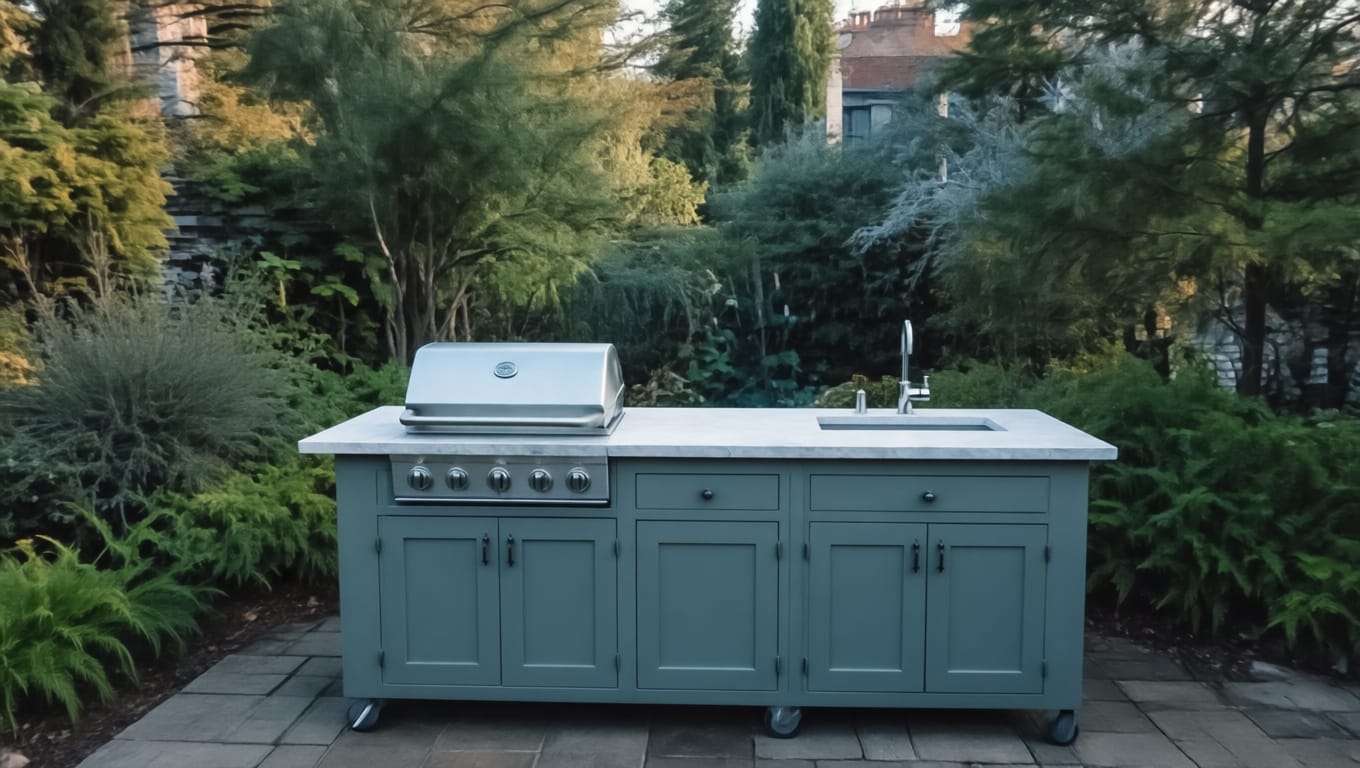
An outdoor kitchen can genuinely change how you use your home during the warmer months. But it’s a significant investment, and the decisions you make at the planning stage will affect how useful and enjoyable the space actually is. Here’s what’s worth thinking through before you get started.
Why outdoor kitchens deserve proper planning
There’s a tendency to treat outdoor kitchens as an afterthought — a project tackled once the main house renovation is done, with a smaller budget and less design attention. That approach tends to produce something that looks fine in April and feels frustrating by August.
A well-designed outdoor kitchen needs to function like any other kitchen: clear workflow, enough worktop space, logical storage, and a layout that matches how you actually cook. The fact that it’s outside doesn’t reduce those requirements. If anything, the constraints are tighter.
Think about what you want to do in the space. If you’re primarily grilling for family meals, that’s a different brief to someone who wants to prep, cook, plate, and serve outside. Getting that clarity early saves a lot of backtracking later.
Materials that can handle the British climate
This is where outdoor kitchen projects can fall apart. The UK climate is damp, variable, and unforgiving to materials that aren’t specified properly.
Stainless steel is the most common choice for outdoor cabinetry because it handles moisture and temperature variation well. Marine-grade stainless — grade 316 rather than the more common 304 — is worth specifying if the space is particularly exposed or near a coastal area. It costs more, but the durability difference over time is real.
Masonry-built units using concrete block or brick with a rendered or tiled finish are another solid option, especially if you want a more architectural feel. They’re permanent and very robust, though they offer less flexibility if you change your mind about the layout later.
For worktops, porcelain and granite both perform well outdoors. Avoid materials with high porosity, and check that any stone or composite you’re considering is rated for outdoor use. Indoor kitchen worktops are not always appropriate in an outdoor environment.
Cabinetry doors and drawer fronts need to be properly sealed and made from materials specified for exterior use. Treated hardwood, powder-coated aluminium, and specific outdoor-rated board materials can all work. Your designer should be able to tell you exactly what’s been used and why.
Getting the layout right
Outdoor kitchen layout follows the same logic as indoor layout: think about the relationship between your main cooking zone, your prep area, and wherever food is going to end up. If you’re cooking for guests who are nearby, you also want to think about where people will gather and whether the layout supports conversation while you cook.
Proximity to the house matters. The closer your outdoor kitchen is to the main kitchen, the easier it is to bring out things you’ve forgotten, run water, and deal with waste. A long trek between the two gets old quickly.
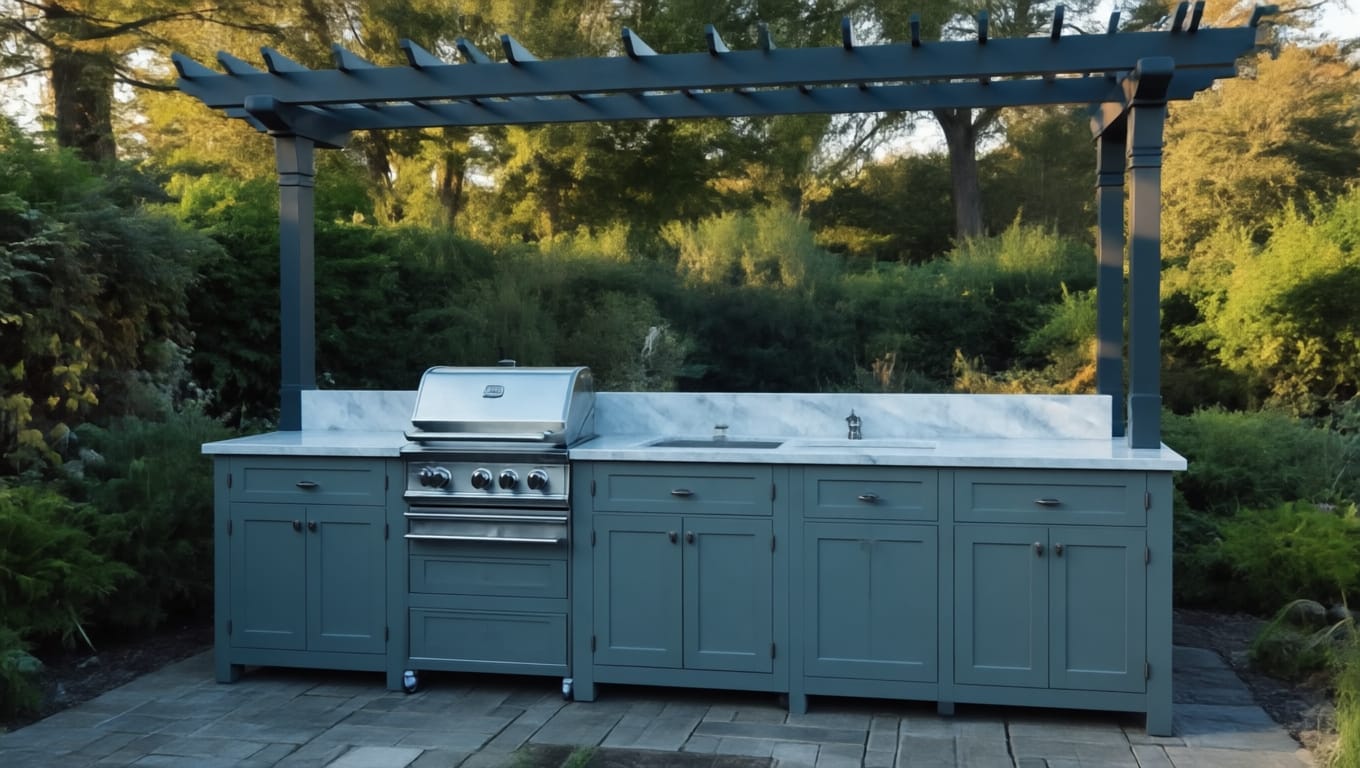
Shading is worth factoring in early. Cooking in direct afternoon sun is uncomfortable, and a fixed overhead structure such as a pergola or canopy changes how the space feels and how long into the evening you can use it. Think about where shadows fall at different times of day before you fix the position of the kitchen.
Plumbing and drainage are often underestimated. A sink with a proper cold water supply and a drain that runs to the surface water or grey water system makes an outdoor kitchen far more practical. Hot water is a luxury unless you’re doing serious prep outside, but cold running water is close to essential.
Power and utilities
Any electrical work for an outdoor kitchen in the UK must comply with Part P of the Building Regulations and should be carried out by a qualified electrician. Outdoor circuits need appropriate weatherproof sockets and fittings, and you’ll need an RCD-protected circuit.
Gas is the most common fuel for outdoor cooking appliances, and you’ll need to decide between a fixed gas supply and bottled LPG. A fixed supply is more convenient for regular use and avoids the hassle of running out of gas mid-cook. However, it requires a Gas Safe registered engineer to install and may involve more groundwork. LPG is simpler to set up initially, but storage and changeover are practical considerations.
If you’re thinking about a pizza oven, a smoker, or a solid fuel grill, ventilation and ember management become relevant. Make sure any overhead canopy or structure has sufficient clearance and appropriate materials above the cooking zone.
Storage and shelter for year-round use
A lot of outdoor kitchens become seasonal at best because they weren’t designed with protection in mind. If you want to use the space across more of the year, some investment in shelter pays off.
Built-in storage with lockable, weatherproof doors means you can leave oils, utensils, and equipment outside without bringing everything in after every session. This makes the space feel genuinely usable rather than something you have to set up and pack down each time.
Heating the space, whether through infrared heaters mounted above or a fire pit nearby, extends the season meaningfully. This is worth thinking about at the design stage so it can be integrated properly rather than added as an afterthought.
Consider also how the space will look and feel during winter. A good outdoor kitchen should be designed so that when it’s covered or not in use, it still reads as a considered part of the garden rather than an abandoned building site.
Budget and what drives the cost
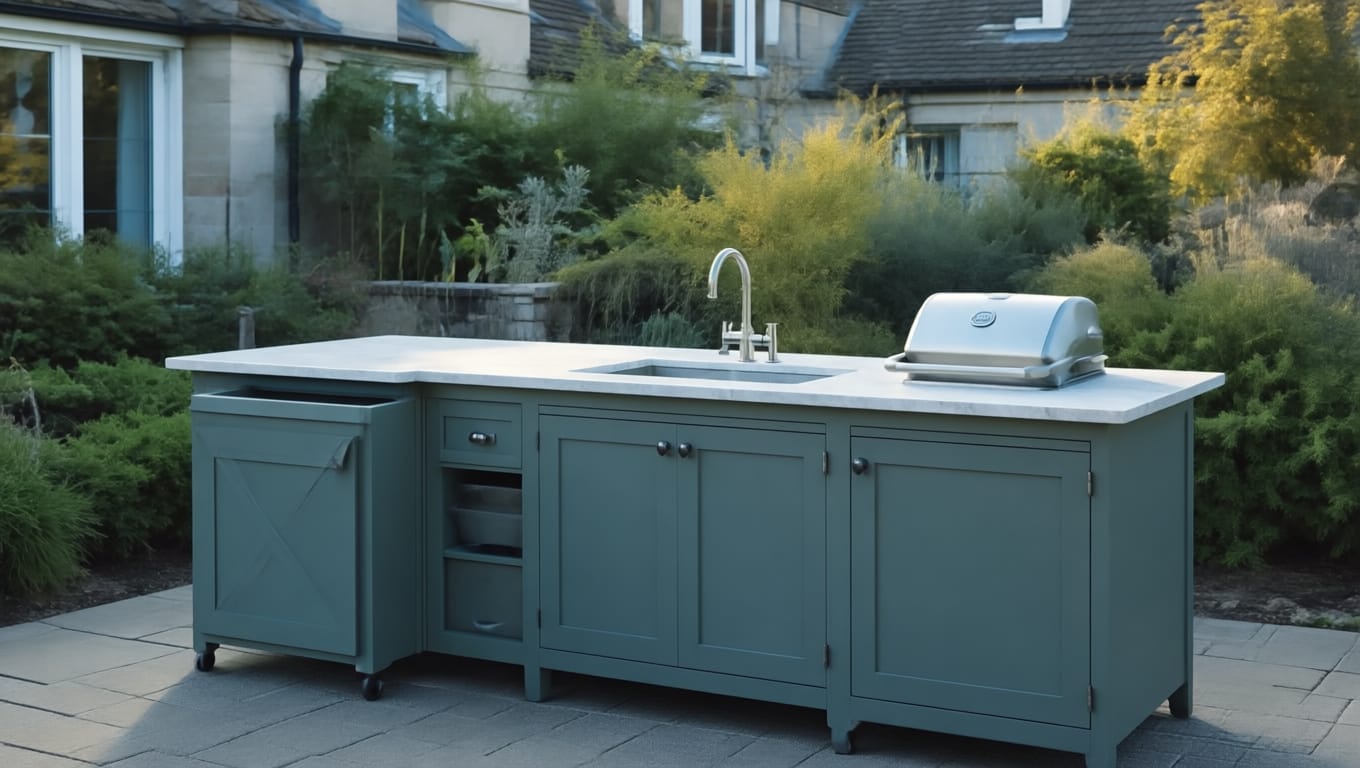
Outdoor kitchens can vary enormously in cost depending on what’s included, the materials specified, and how much infrastructure work is required.
The largest cost drivers are usually the structural elements and utilities: groundwork, a permanent canopy or overhead structure, gas installation, drainage, and electrical work. These are the things that can’t be cut without affecting how the space functions.
Appliances vary widely in quality and price. A built-in gas grill from a reputable manufacturer will outperform a cheap alternative over time, and replaceable parts are an important consideration — appliances that are hard to service become expensive problems. Spend more where it counts for daily use, and be more flexible on the elements that matter less.
Be cautious of budgets that look attractive because they exclude the utility connections, the groundwork, or professional design input. These are not optional extras. They are the parts that make the space actually work.
How Mastercraft approaches this
At Mastercraft, we apply the same design discipline to an outdoor kitchen as we do to any other part of your home. That means understanding how you cook, how you entertain, and how the space connects to the rest of your house before we begin talking about materials or appliances.
We think carefully about proportion, workflow, and the relationship between the outdoor kitchen and its surroundings. A well-designed outdoor kitchen should feel like a natural extension of your home, not something that was bolted on during a good summer.
Every project we work on is considered individually. There’s no standard package or off-the-shelf layout. If you’re exploring whether an outdoor kitchen is right for your home and garden, we’re happy to have that conversation early, before any commitments are made.
Explore more from Mastercraft Kitchens
If you’re planning a wider kitchen project alongside your outdoor space, you can find out more about what we do across the UK here:
- fitted kitchens in Liverpool
- fitted kitchens in Manchester
- kitchen design in Harrogate
- fitted kitchens in Leeds
- fitted kitchens in Wirral
- bespoke kitchens in Yorkshire
If you’re at the early stages of thinking about an outdoor kitchen and would like to talk through what’s possible, get in touch to arrange a design consultation with one of our team.
Frequently asked questions
Do I need planning permission for an outdoor kitchen in the UK?
In most cases, a standalone outdoor kitchen won’t require planning permission if it’s within the boundary of your property and below certain size thresholds. However, if you’re building a substantial permanent structure or attaching it to the house, permitted development rules may apply. It’s worth checking with your local planning authority before you start, particularly if you’re in a conservation area or listed building.
What’s the best material for outdoor kitchen cabinetry in the UK?
Marine-grade stainless steel, masonry construction, treated hardwood, and powder-coated aluminium are all well-established options for the UK climate. The right choice depends on your budget, the aesthetic you’re after, and how exposed the space is. What matters most is that the materials are properly specified and sealed for outdoor use rather than repurposed from an indoor setting.
Can an outdoor kitchen be used year-round in the UK?
With the right design, yes. An overhead structure, weatherproof storage, and some form of heating make a significant difference to how often you’ll actually use the space. An outdoor kitchen that’s only enjoyable in full summer sun is a poor return on investment. Thinking about all-season usability at the design stage is much easier than trying to retrofit it later.
How far from the house should an outdoor kitchen be positioned?
Closer is generally more practical. You want to be able to bring things out from the main kitchen easily and manage waste without a long walk. Most outdoor kitchens work well when positioned within a few metres of the house, ideally with direct access from the main kitchen or a nearby door. Smoke management is a consideration too, so factor in the direction of prevailing wind relative to the house and where guests tend to gather.
What appliances are worth investing in for an outdoor kitchen?
A high-quality built-in grill is usually the centrepiece and worth spending on, since it’s what you’ll use most. A sink with a cold water connection is close to essential for practicality. Beyond that, it depends on how you cook: a side burner, a pizza oven, or a dedicated smoker can all add genuine value if you’ll actually use them. Be selective rather than specifying everything at once — it’s usually better to do fewer things well.