A small kitchen extension won’t give you a vast room, but it can give you a kitchen that works properly. The difference between a project that delivers and one that disappoints usually comes down to how carefully the design is thought through before anything is built.
Start with the layout, not the look
It’s tempting to begin with cabinet finishes and worktop samples, but in a small extension the layout is everything. A few centimetres in the wrong place can mean a fridge door that catches a drawer, or a run of worktop that’s too short to be genuinely useful.
Think about your workflow first. Where do you prep, cook, and plate up? Where does washing up happen? In a compact space, these zones need to be arranged so they don’t conflict with each other or with the way people move through the room.
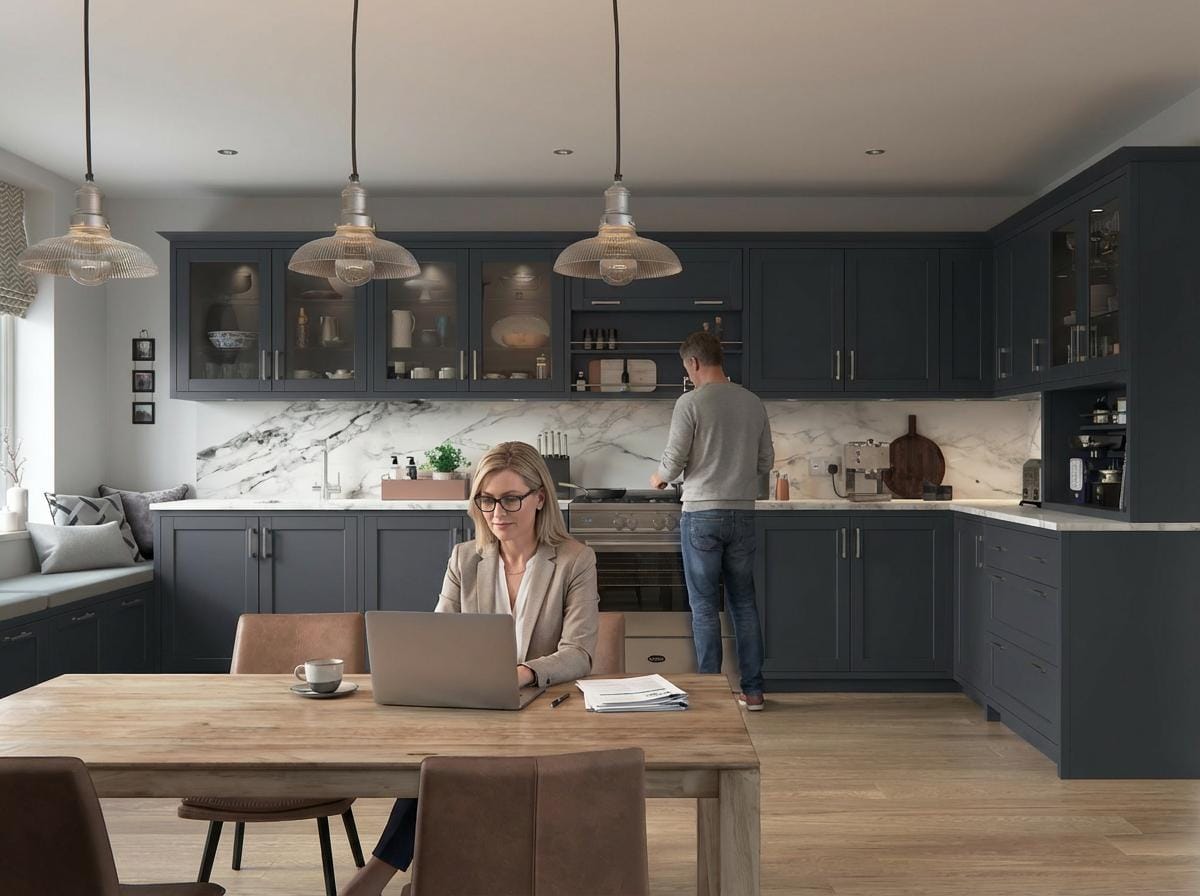
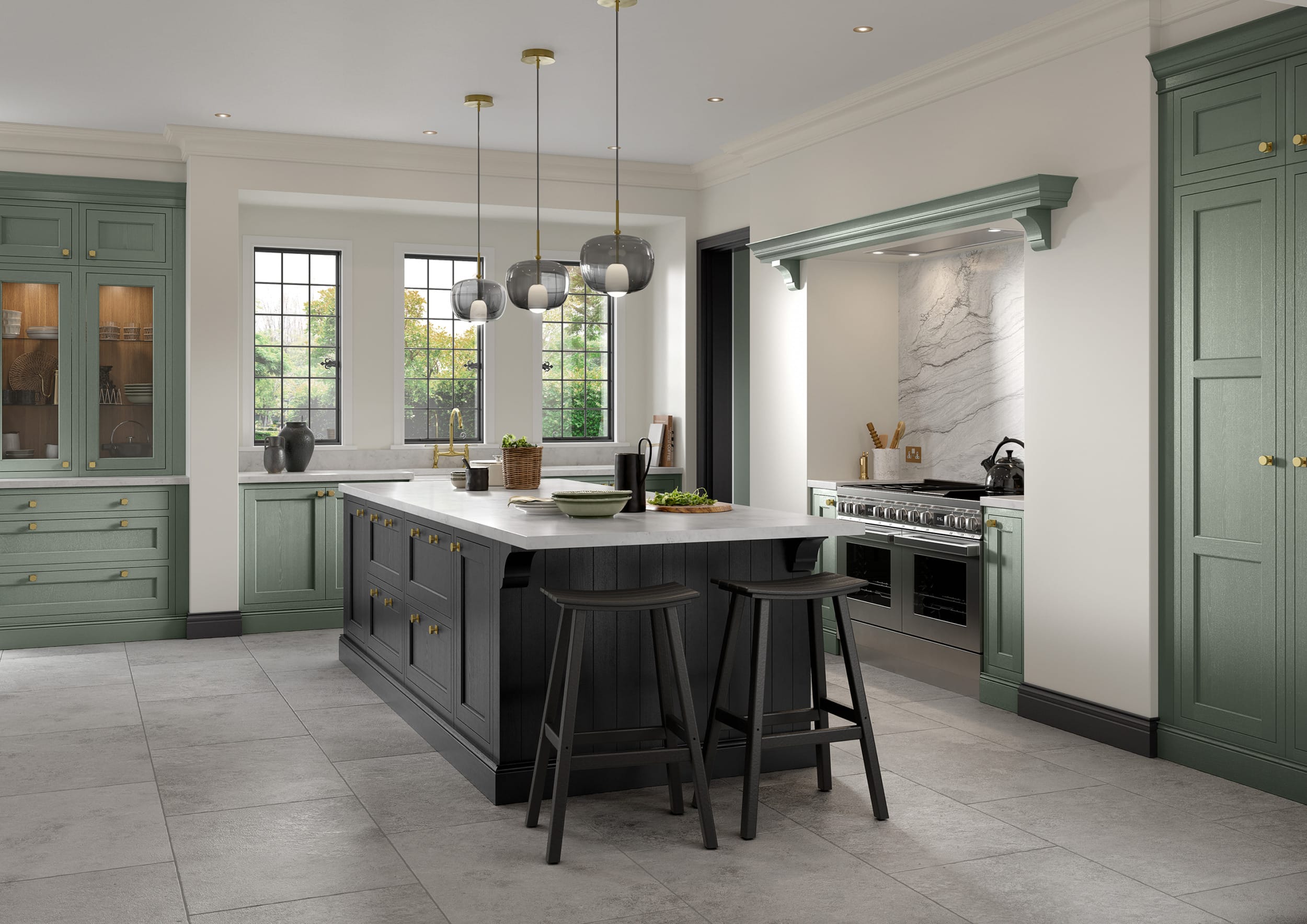
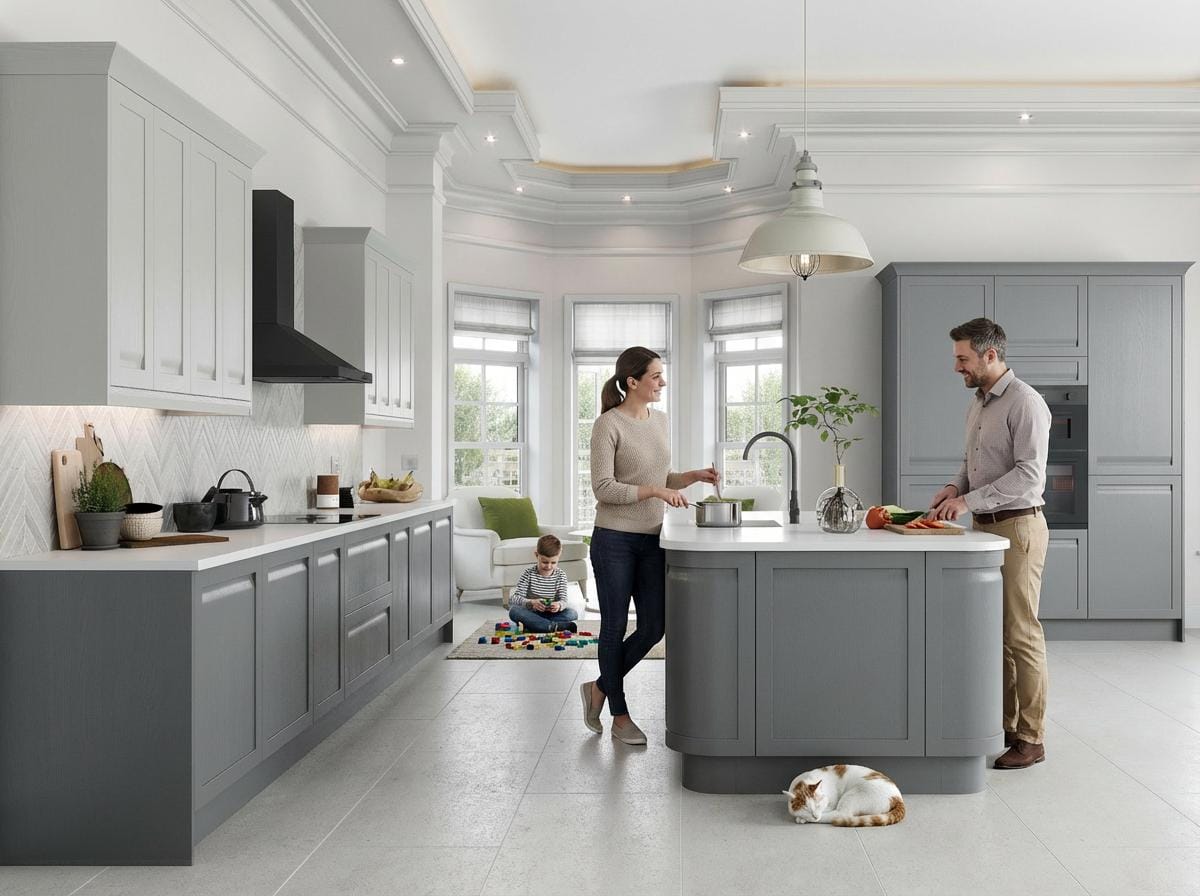
A galley layout or an L-shape often works better in a modest extension than a large island. An island sounds appealing, but if it leaves you with narrow walkways on both sides, it creates more problems than it solves
Use the full height of the room
One of the most underused opportunities in a small kitchen is vertical space. If your extension has a higher ceiling than the original kitchen, or even a modest increase in height, that extra space above standard wall units is worth designing into.
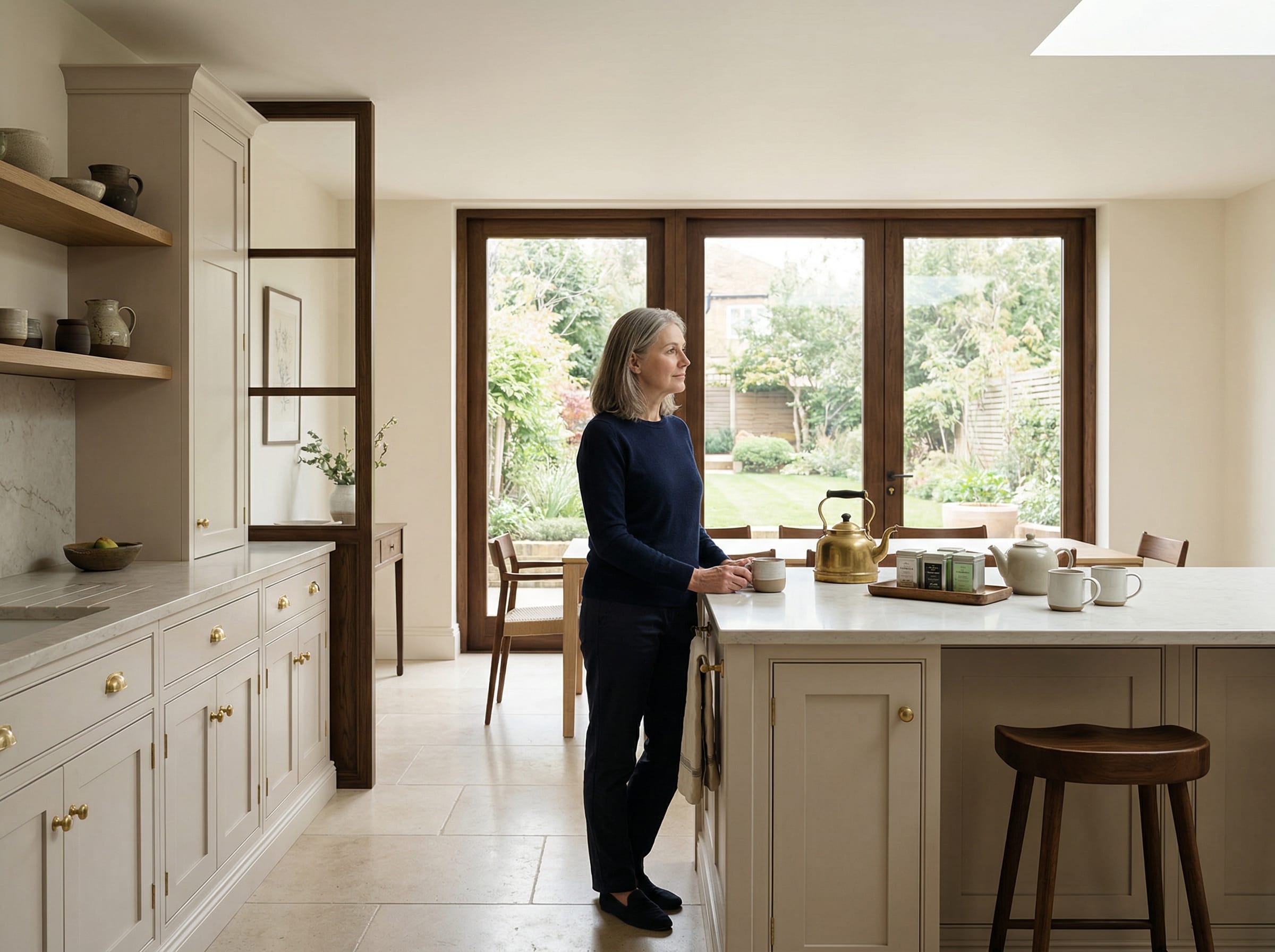
Tall cabinets running to ceiling height give you significantly more storage than standard wall units with a gap above them. They also make the room feel more considered and less piecemeal. A run of full-height cabinetry on one wall can house a larder, an oven column, and a fridge-freezer without eating into your floor plan.
If you’re having a roof lantern or glazed roof panel, think carefully about where the structural elements sit. You don’t want a beam landing exactly where a tall cabinet run was planned.
Be precise about worktop space
In a small kitchen, worktop space is often the first thing that gets compromised when the layout isn’t planned carefully. People end up with a beautiful kitchen that has nowhere to put a chopping board.
Work out how much clear worktop you actually need for the way you cook. Most people need a decent run on at least one side of the hob, and a separate area near the sink for prep. If you’re short on length, think about depth. A worktop that runs slightly deeper than standard can make a real difference without taking up any more floor space.
Consider where appliances will sit. A toaster, a kettle, and a coffee machine can take up a surprising amount of worktop if they’re not planned for. Dedicated appliance garages or a section of worktop with a socket run behind it keeps things tidy without hiding everything away in a cupboard.
Think carefully about natural light
Extensions often bring the opportunity to add glazing, and in a small kitchen that can change how the room feels entirely. But glazing needs to be positioned with the layout in mind, not just the aesthetics.
A large window or set of bifold doors on the rear wall works well if the kitchen runs along the side walls. If your main cabinet run is on the rear wall, you’ll lose storage to gain light, and that trade-off needs to be a conscious decision rather than an afterthought.
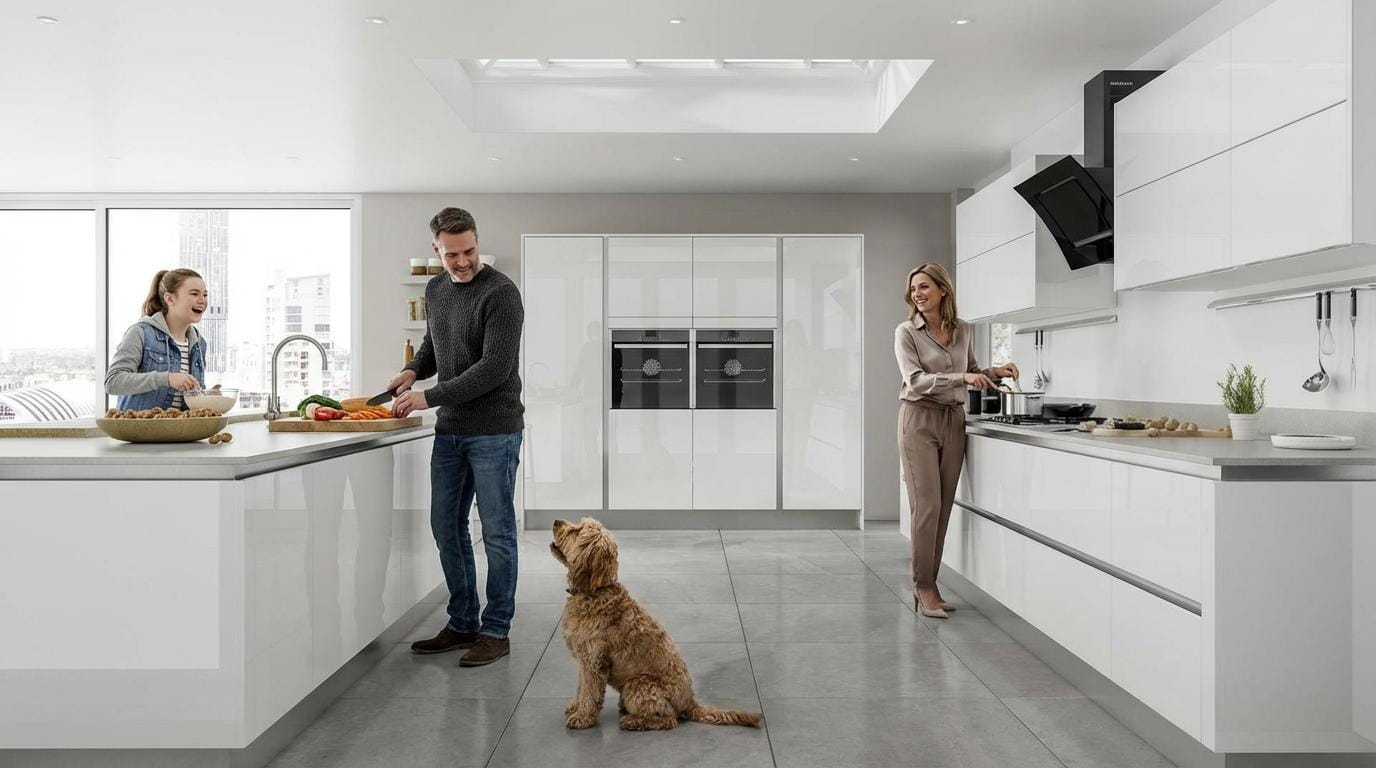
Roof glazing, whether a lantern or a flat rooflight, brings light in without affecting wall space. It works particularly well over a central island or a dining area within the kitchen. The light it produces is different to side glazing, softer and more even, which suits a kitchen well
Storage that earns its place
In a small kitchen, every cabinet needs to justify itself. Storage that looks good but is awkward to use, deep corner units you can’t reach into, overhead cupboards too high for daily items, ends up being wasted space.
Pull-out larder units, deep drawer stacks, and internal drawer organisers tend to work better in compact kitchens than a mix of shelved cupboards. Drawers give you full visibility and access to everything inside. Shelved cupboards, especially lower ones, often mean things get pushed to the back and forgotten.
Think about what you actually store and how often you use it. Everyday items should be easy to reach without bending or stretching. Seasonal or occasional items can go higher or deeper. Getting that hierarchy right makes a small kitchen feel much more manageable.
Where the extension meets the existing house
The junction between a new extension and the original kitchen is often where small projects run into trouble. If the two spaces aren’t designed together, you can end up with a layout that feels disconnected, or a structural opening that’s in the wrong place for the kitchen to flow properly.
If you’re knocking through to create an open plan space, the position of the structural beam matters. It affects ceiling height, lighting zones, and where cabinetry can run. Get your kitchen designer involved before the structural drawings are finalised, not after.
Floor levels are worth checking too. Extensions sometimes sit slightly lower than the original floor, and even a small step can affect how the space feels and how cabinetry is fitted across the threshold
How Mastercraft approaches this
When we work on a small extension project, we start by understanding how the space will actually be used. That means asking about cooking habits, how many people use the kitchen at once, whether it needs to double as a dining or social space, and what the storage demands are. The design follows from that, not from a standard layout applied to the footprint.
We draw up the kitchen in the context of the full extension, including structural openings, glazing positions, and ceiling heights. That way, the cabinetry, worktops, and appliance positions are resolved before anything is built, rather than being fitted around decisions that have already been made.
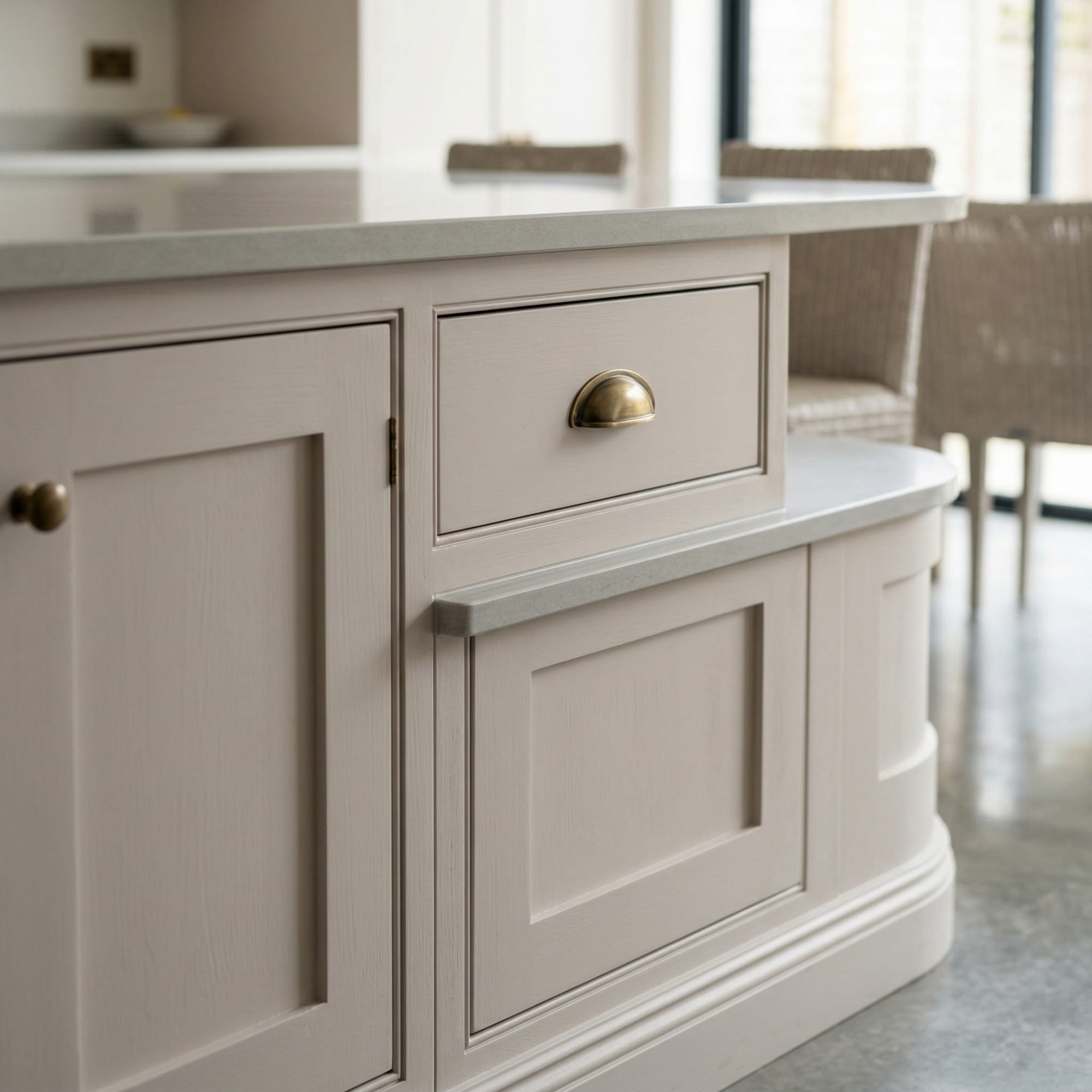
Every kitchen we design is drawn and specified individually. There are no standard packages adapted to fit. If a small extension needs a particular cabinet depth, a bespoke internal configuration, or a worktop cut around an awkward structural detail, that’s what we design and build.
Start your Mastercraft design consultation
You'll work directly with a Mastercraft designer to plan a kitchen around your home, your layout and how you live day to day. From the first sketches through to technical planning and installation, everything is handled by one experienced in-house team.
Designed around your home
Every kitchen is made-to-measure for your room, your architecture and the way you use the space.
Technical survey included
We measure and plan everything before production begins so your kitchen fits exactly as intended.
Materials and samples
See door finishes, worktops and colours in your own home before making final decisions.

Browse the Mastercraft design library
Inside you'll find our brochures, design guides, material references and any current Mastercraft offers. A practical starting point if you're thinking about a kitchen but not ready to talk yet.
Explore more from Mastercraft Kitchens
If you’re planning a kitchen project, you can find out more about our work across the region here:
- fitted kitchens in Liverpool
- fitted kitchens in Manchester
- fitted kitchens in Harrogate
- fitted kitchens in Leeds
- fitted kitchens in Wirral
- bespoke kitchens in Yorkshire
If you’re at the planning stage of a kitchen extension and want to talk through the design, we’d be glad to arrange a consultation. Get in touch with the Mastercraft team to get started.
Frequently asked questions
How small is too small for a kitchen extension to be worth doing?
There’s no fixed minimum, but an extension that adds less than around two metres of depth rarely transforms the kitchen in a meaningful way. What matters more than the overall size is what the extra space allows you to do, whether that’s a better layout, more storage, or room for a dining area. A designer can help you assess whether the footprint justifies the investment before you commit.
Should I involve a kitchen designer before or after the architect draws up the extension plans?
Before, if at all possible. The position of structural openings, beams, and glazing all affect where cabinetry can go and how the layout will work. If those decisions are made without the kitchen in mind, you can end up with a structurally sound extension that’s awkward to fit a functional kitchen into. Getting a kitchen designer involved early avoids that.
Is an island a good idea in a small kitchen extension?
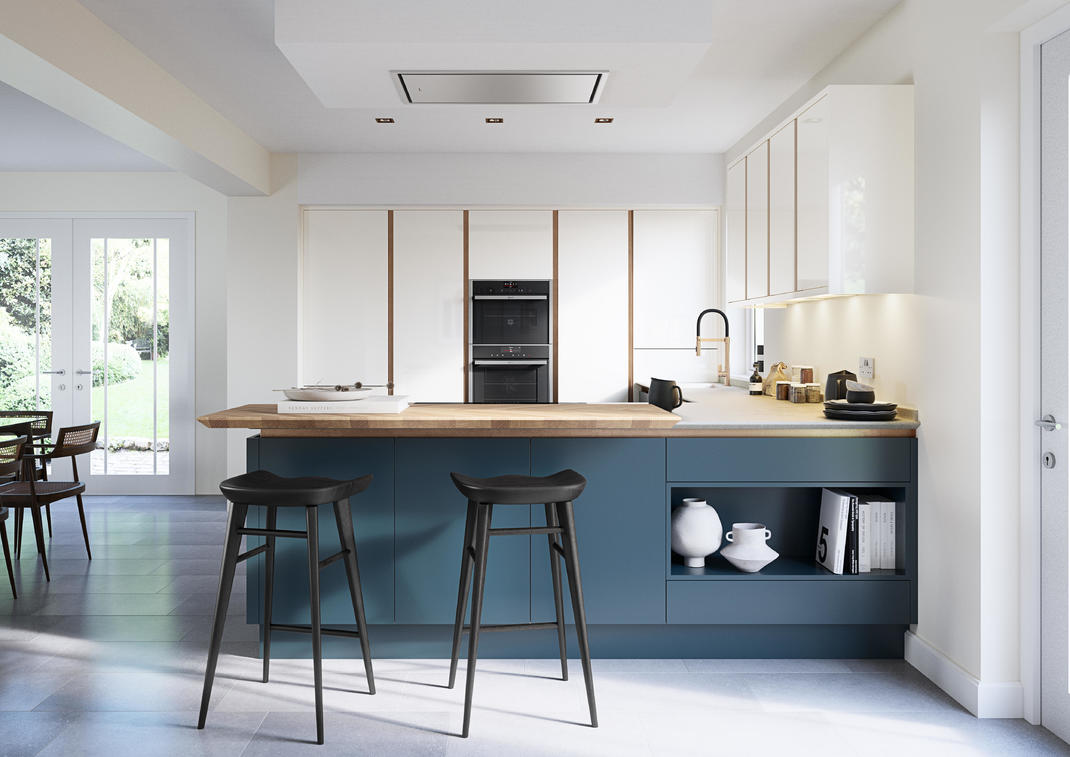
It depends on the footprint and the layout. An island needs at least 900mm of clear walkway on each side to be comfortable, so in a narrow extension it can restrict movement more than it helps. A peninsula fixed to one wall often gives you similar benefits, including extra worktop and seating, without the same space demands.
What’s the best way to add storage in a compact kitchen without it feeling cluttered?
Full-height cabinetry is usually more efficient than a mix of wall units and base units with gaps above. Deep drawer stacks give better access than shelved lower cupboards, and pull-out larder units make use of narrow spaces that would otherwise be wasted. The key is designing storage around what you actually use rather than filling every wall with the same unit type.
Does roof glazing make a small kitchen feel bigger?
It can, particularly if the side walls are used for cabinetry and there’s limited scope for windows. A roof lantern or rooflight brings in daylight without taking up wall space, and the quality of light it produces is generally softer and more even than a side window. It won’t make the room physically larger, but it can make a compact kitchen feel less enclosed.