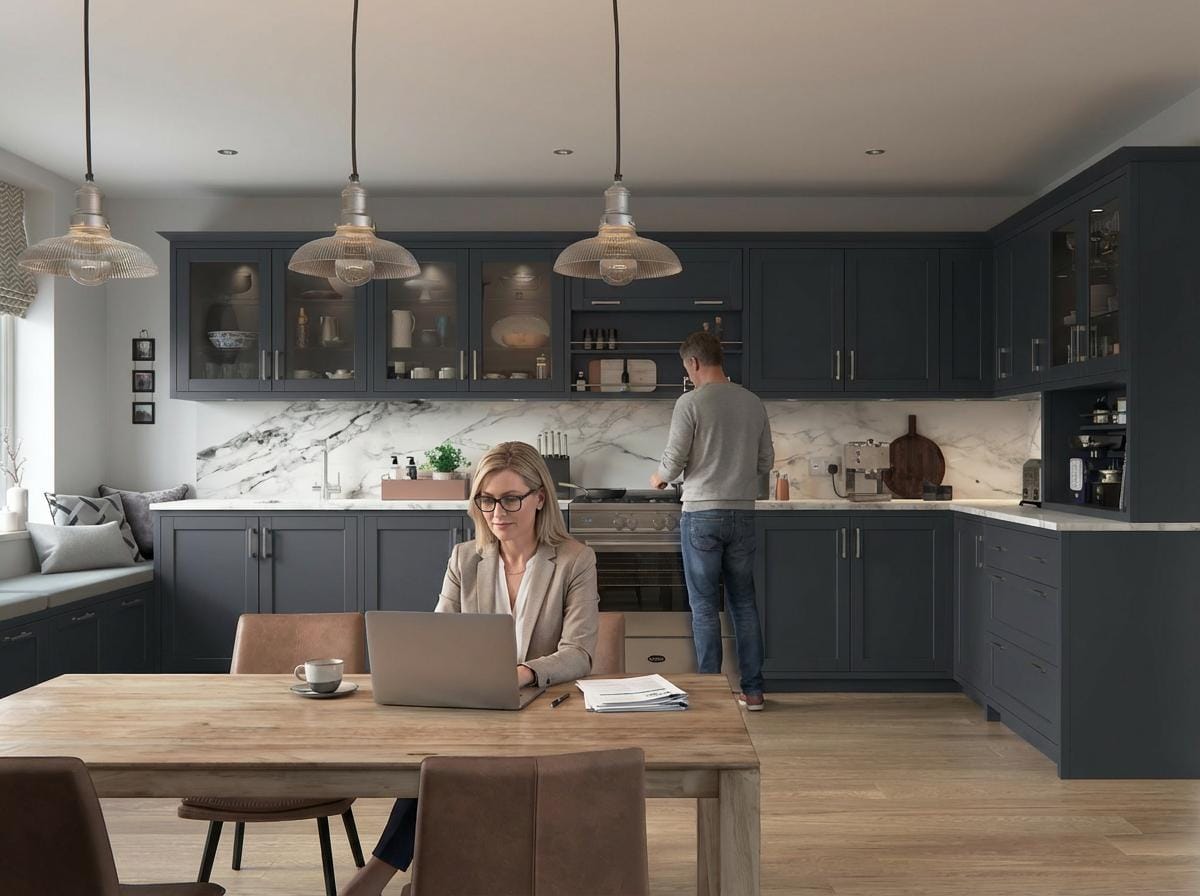
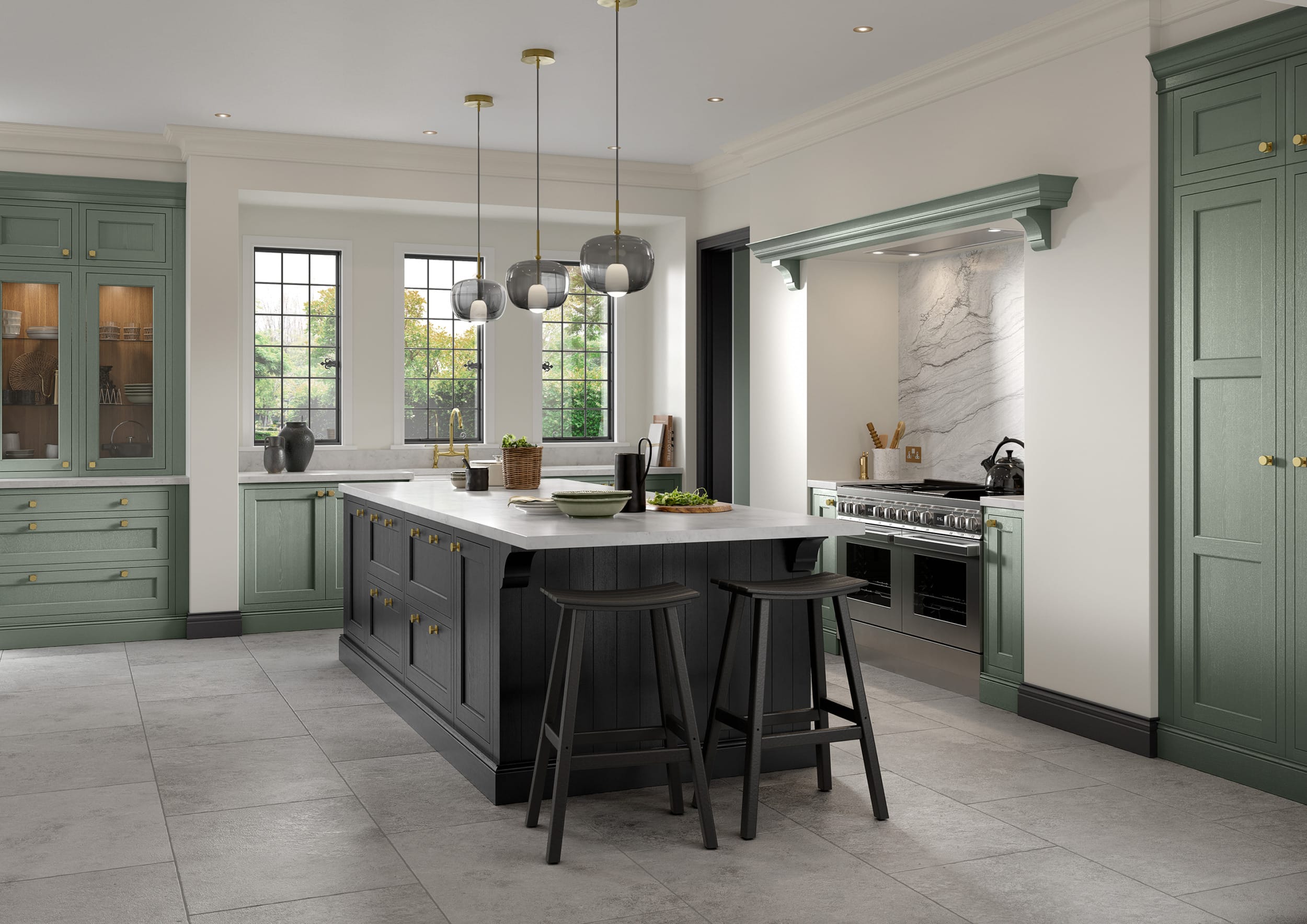
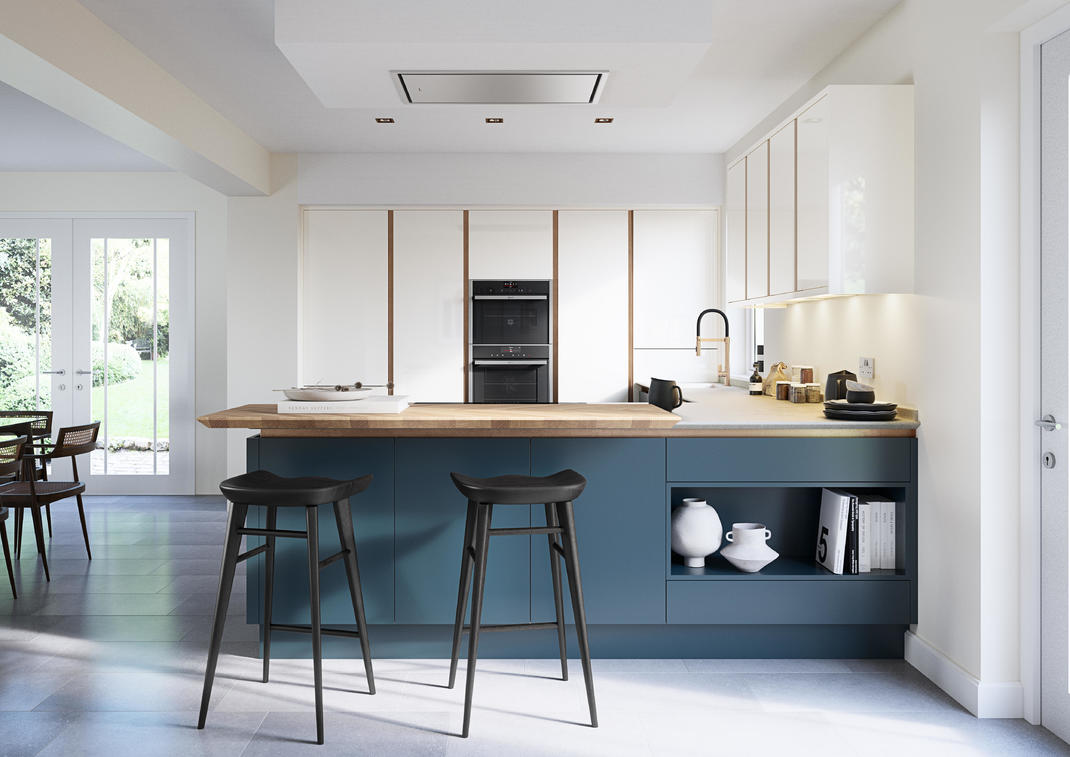
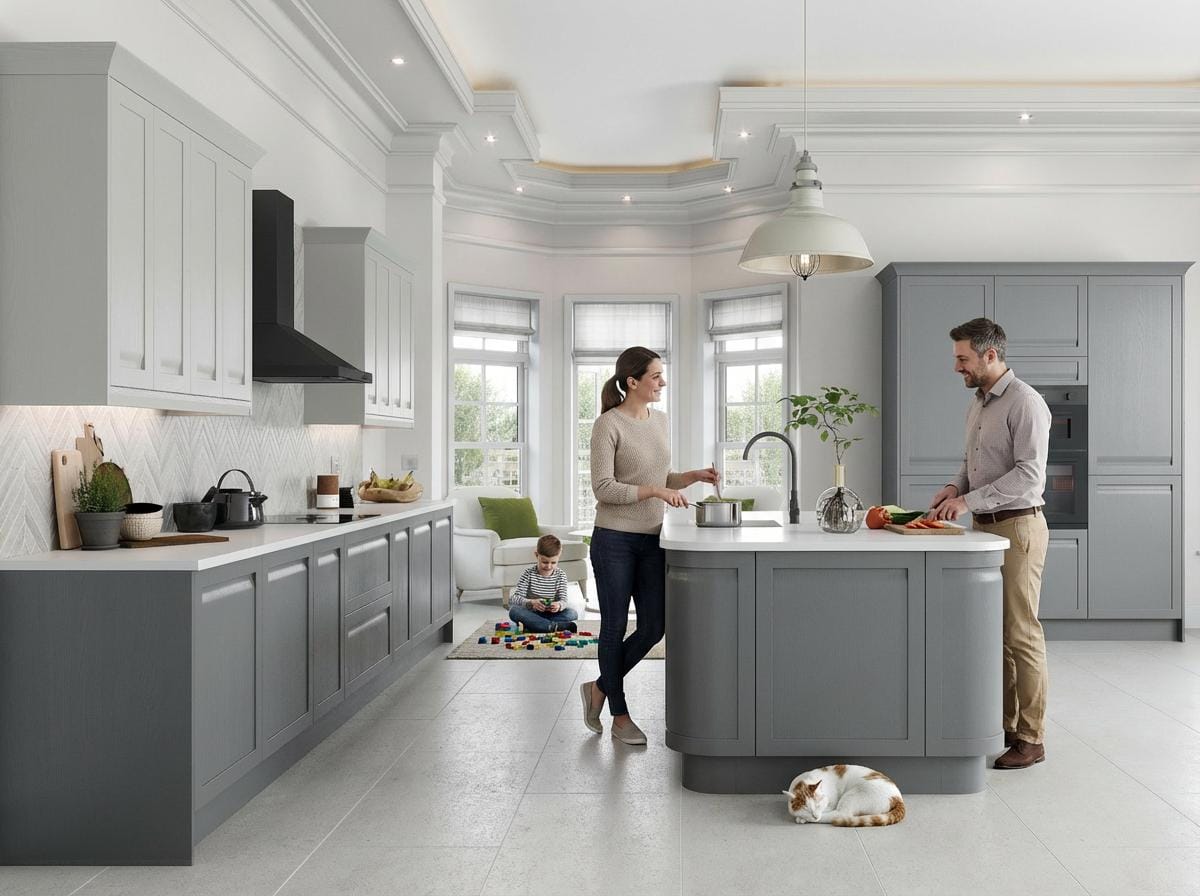
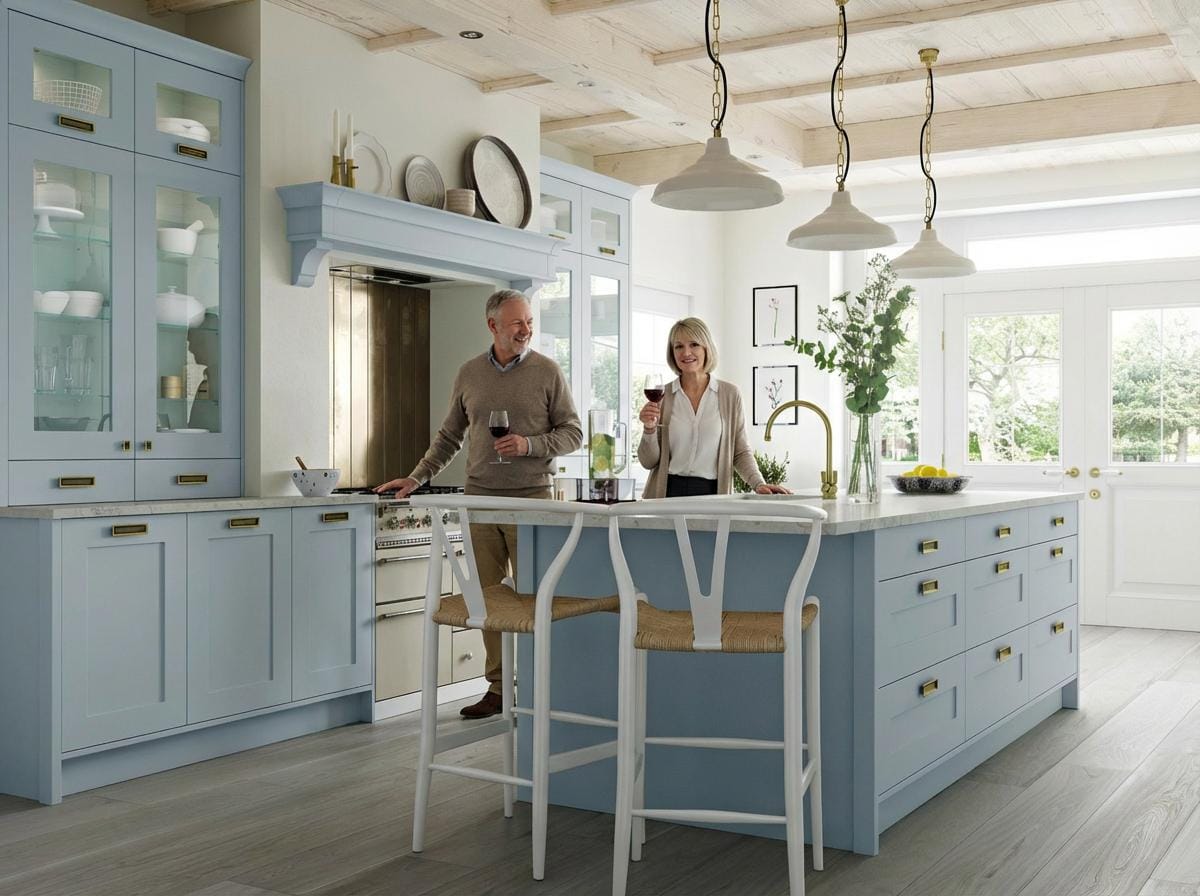
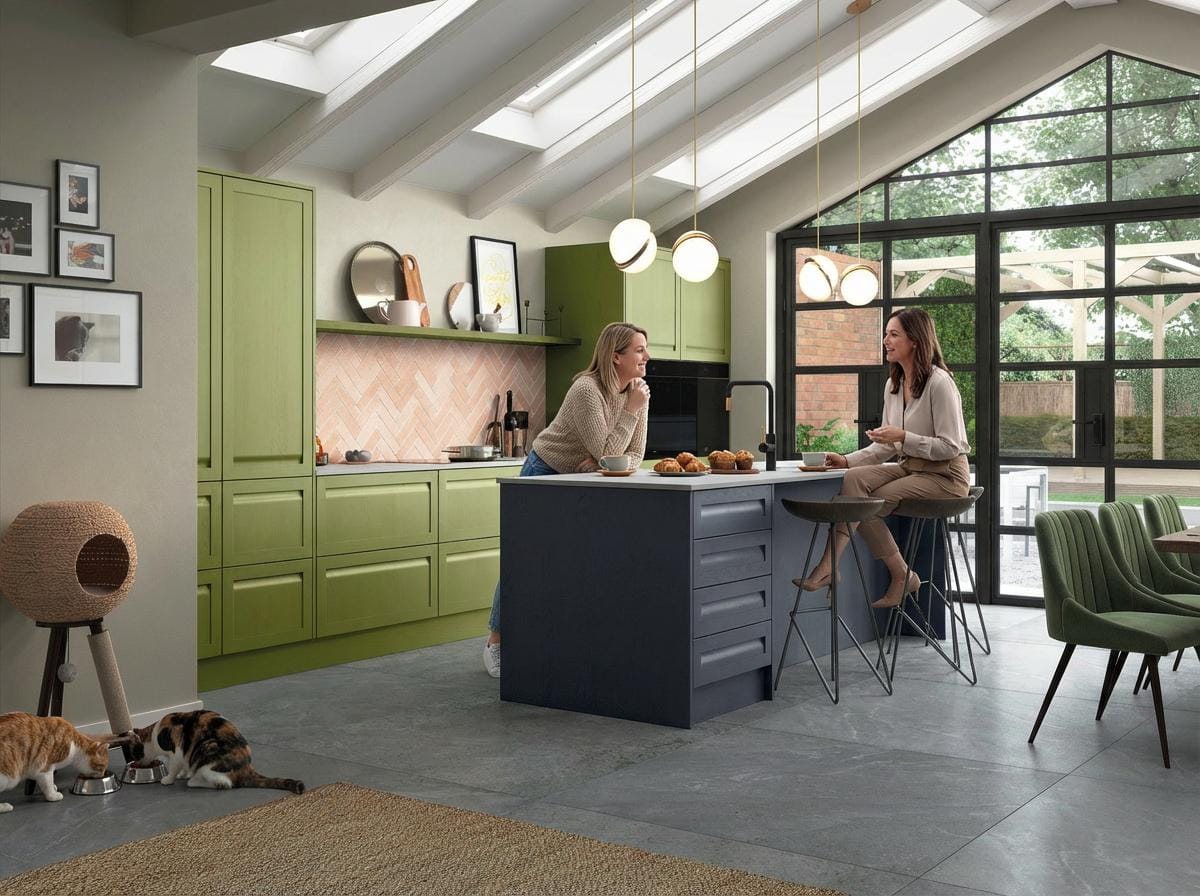
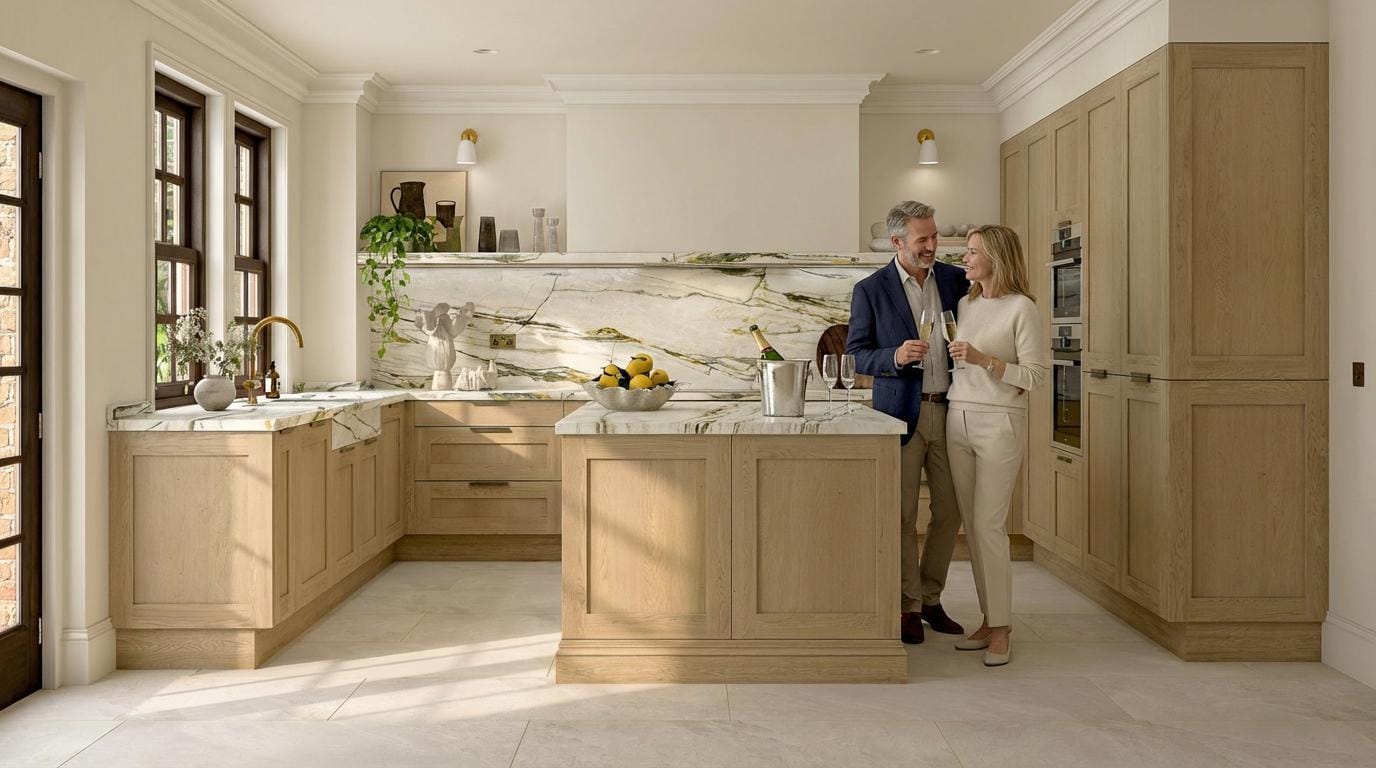
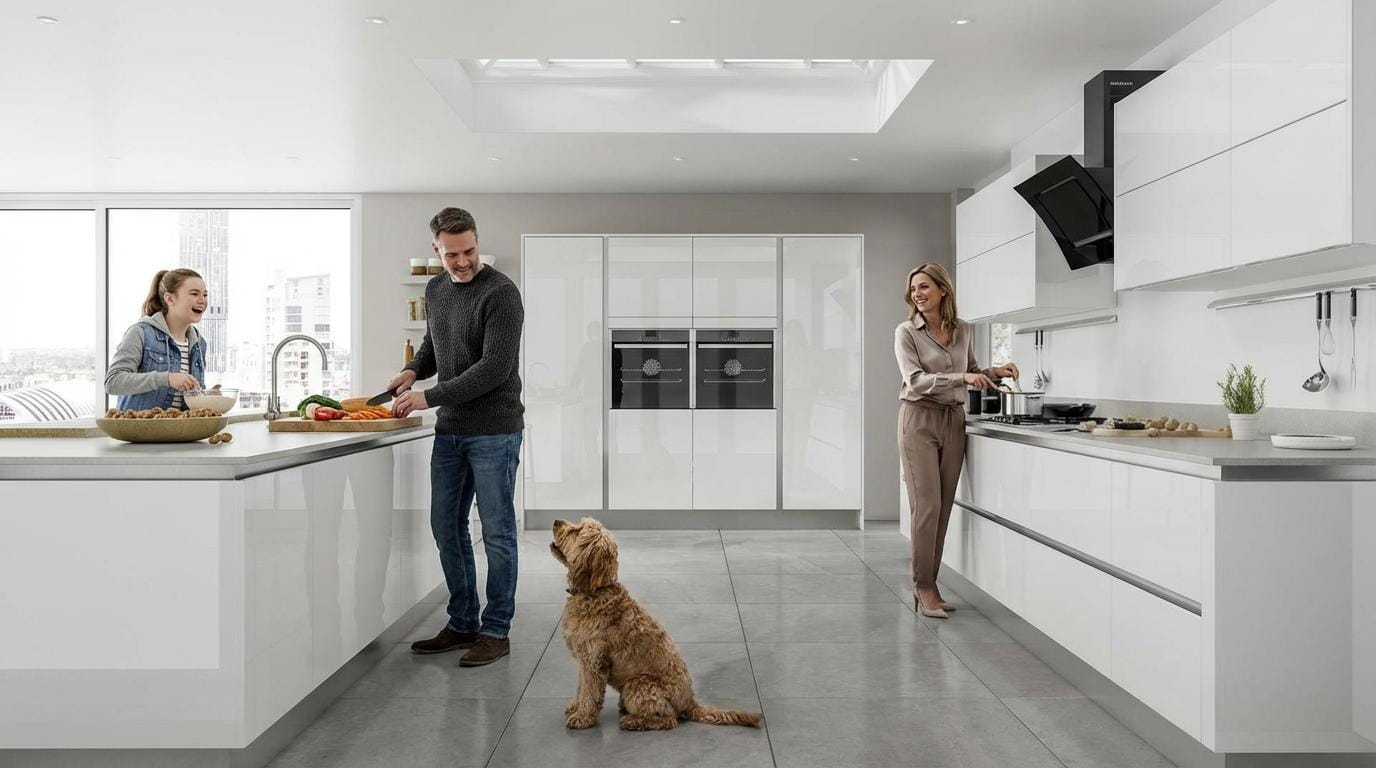
Shaker has been the go-to cabinet style in British kitchens for years, and it earns that position. It’s clean, it works with most layouts, and it ages well. But if you’re designing a kitchen from scratch and want a little more surface interest, grooved and beaded cabinet doors are worth understanding properly before you decide
What grooved and beaded doors actually are
Shaker doors are defined by a flat central panel set within a simple frame. Grooved doors take that same basic structure and add a series of vertical or horizontal lines routed into the panel face. Beaded doors go a step further, incorporating a small raised moulding, typically around the inner edge of the frame, that gives the door a more traditional, almost furniture-like quality.
These aren’t new ideas. Both styles have roots in Georgian and Victorian cabinetry, which is part of why they sit so naturally in older British homes. What’s changed is that they’re now being specified more often in contemporary settings too, where the added texture provides contrast against smooth stone worktops and plain plastered walls.
The difference in appearance is subtle at certain distances but becomes more pronounced as light moves across the surface. That’s worth keeping in mind when you’re choosing a paint colour or deciding on the direction of any grooves.
Where they work well
Grooved and beaded doors tend to perform best in kitchens where there’s enough natural light to show the surface detail. In a north-facing room with limited windows, the texture can flatten out and lose much of its point. In a well-lit space, the same doors will shift through the day as the light changes angle, which gives the kitchen a quality that flat shaker panels simply can’t match.
They also suit rooms with some architectural character. If your kitchen has cornicing, ceiling roses, or original sash windows, a beaded door profile will feel at home in a way that a plain shaker might not quite achieve. The cabinetry starts to feel like part of the building rather than something installed into it.
That said, they can work in more contemporary spaces too, particularly when the groove pattern is simple and the colour is kept neutral. A handleless grooved door in a warm white or soft grey reads as modern but with more depth than a completely flat slab.
The practical side of choosing a more detailed door
One question that comes up regularly is cleaning. Grooved doors do collect dust along the routed lines, and beading can trap grease near the hob if the kitchen isn’t well ventilated. This isn’t a reason to avoid them, but it’s worth being honest about. If you cook heavily and prefer low-maintenance surfaces, a smooth shaker or slab door will be easier to wipe down.
The quality of the routing also matters more than people expect. On a well-made door, the grooves will be crisp and consistent. On a cheaper version, they can look slightly rough or uneven, which becomes more obvious once the door is painted. If you’re investing in a bespoke kitchen, the door quality should match the rest of the specification.
Paint finish plays a role too. A satin or eggshell finish will show the texture clearly and is easier to clean than a flat matt. If you want the detail to read well and the surface to hold up over time, it’s worth discussing the finish with your designer rather than defaulting to whatever’s standard
 Choosing between grooved and beaded profiles
 Choosing between grooved and beaded profiles
The two styles are often grouped together but they have a different feel in practice. Grooved doors tend to look slightly more contemporary, particularly with a simple two or three line pattern. Beaded doors read as more traditional and work especially well in in-frame cabinetry, where the frame itself already has a furniture-like quality.
If you’re fitting a kitchen in a Victorian or Edwardian property, a beaded in-frame door is likely to feel more considered than a standard shaker. The proportions of the moulding can be adjusted to suit the scale of the room, which is one of the advantages of working with a bespoke maker rather than choosing from a fixed range.
For newer builds or more open-plan spaces, a grooved door in a handleless format can add texture without pulling the room in a period direction. The key is making sure the groove spacing and depth are proportionate to the door size. A wide door with a single narrow groove in the centre will look sparse. A narrower door with three grooves will look considered.
How these doors interact with the rest of the kitchen
Cabinet doors don’t exist in isolation. The texture you choose will affect how other elements in the kitchen read. A beaded door with a lot of surface detail works best when the worktop, splashback, and flooring are relatively calm. If everything is competing for attention, the kitchen starts to feel busy rather than layered.
Handles are worth thinking about carefully with these profiles. Cup handles and bar handles both work well, but the scale needs to be right. A heavy, oversized bar handle on a delicate beaded door can look clumsy. A small, finely made cup handle in brass or bronze will usually complement the detail rather than fight it.
Colour choice also shifts slightly with a textured door. Because the surface catches light differently, the same paint colour can look warmer or cooler depending on the groove depth and direction. It’s worth looking at painted samples on the actual door profile before committing, not just on a flat card

How Mastercraft approaches this
When a client is drawn to grooved or beaded doors, we start by understanding the room before we talk about profiles. The architecture, the light, the layout, and how the kitchen will be used day to day all shape whether a more detailed door is the right call. A profile that looks beautiful in one setting can feel out of place in another, and that’s not something you can fully judge from a brochure.
We work with a small number of makers whose door quality is consistent enough to carry a painted finish well. The routing needs to be precise, the timber needs to be stable, and the paint needs to be applied properly for the detail to read as intended. These aren’t things you can cut corners on if the result is going to hold up over years of daily use.
Every kitchen we design is drawn up to suit the specific room and the people using it. If a grooved or beaded door is the right choice, we’ll specify it properly, including the profile depth, the handle scale, the paint finish, and how it sits alongside the worktop and splashback. If a plain shaker would serve you better, we’ll say so.
Start your Mastercraft design consultation
You'll work directly with a Mastercraft designer to plan a kitchen around your home, your layout and how you live day to day. From the first sketches through to technical planning and installation, everything is handled by one experienced in-house team.
Designed around your home
Every kitchen is made-to-measure for your room, your architecture and the way you use the space.
Technical survey included
We measure and plan everything before production begins so your kitchen fits exactly as intended.
Materials and samples
See door finishes, worktops and colours in your own home before making final decisions.

Browse the Mastercraft design library
Inside you'll find our brochures, design guides, material references and any current Mastercraft offers. A practical starting point if you're thinking about a kitchen but not ready to talk yet.
Explore more from Mastercraft Kitchens
If you’re planning a kitchen in the north of England or Yorkshire, you can find out more about our work here:
- fitted kitchens in Liverpool
- fitted kitchens in Manchester
- fitted kitchens in Harrogate
- fitted kitchens in Leeds
- fitted kitchens in Wirral
- bespoke kitchens in Yorkshire
If you’d like to talk through your kitchen with one of our designers, we’re happy to arrange a consultation at a time that suits you. Get in touch and we’ll take it from there.
Frequently asked questions
Are grooved cabinet doors harder to keep clean than shaker?
They do require a little more attention, particularly along the routed lines where dust can settle. Near the hob, grease can build up in the grooves if the kitchen isn’t well ventilated. A satin or eggshell paint finish makes them easier to wipe down than a flat matt, and a damp cloth along the grooves every week or so is usually enough to keep them looking good.
Do beaded doors only suit period or traditional kitchens?
They suit period properties particularly well, but they’re not limited to them. The key is the profile depth and the overall specification. A finer bead with a contemporary colour and simple hardware can work in a more modern setting. It’s the combination of elements that determines whether the result feels considered or out of place.
What’s the difference between a grooved door and a beaded door?
A grooved door has lines routed into the panel face, which adds texture and shadow. A beaded door incorporates a small raised moulding, usually around the inner edge of the frame, giving it a more furniture-like, traditional quality. Grooved doors tend to read as slightly more contemporary; beaded doors suit in-frame cabinetry and older properties particularly well.
Can I mix grooved or beaded doors with plain shaker doors in the same kitchen?
You can, but it needs a clear logic behind it. Some designers use a more detailed door on island cabinetry and a plainer profile on wall units, which can work well if the proportions are right. Mixing profiles without a considered reason can look unresolved rather than layered. It’s worth discussing the rationale with your designer before committing.
Does the direction of the grooves matter?
Yes, it affects how the door reads in the room. Vertical grooves tend to make a door look taller and suit standard-height cabinetry well. Horizontal grooves can make a door feel wider, which works on larder units or island panels but can look squat on narrower doors. The depth of the groove also affects how much shadow it casts, so it’s worth looking at a physical sample in your own light conditions before deciding.