A kitchen island is one of those features that can genuinely improve how a kitchen functions day to day, or quietly make it harder to use. Which one it becomes depends less on how it looks and more on how carefully it’s been designed around your space and your habits.
Size is where most islands go wrong
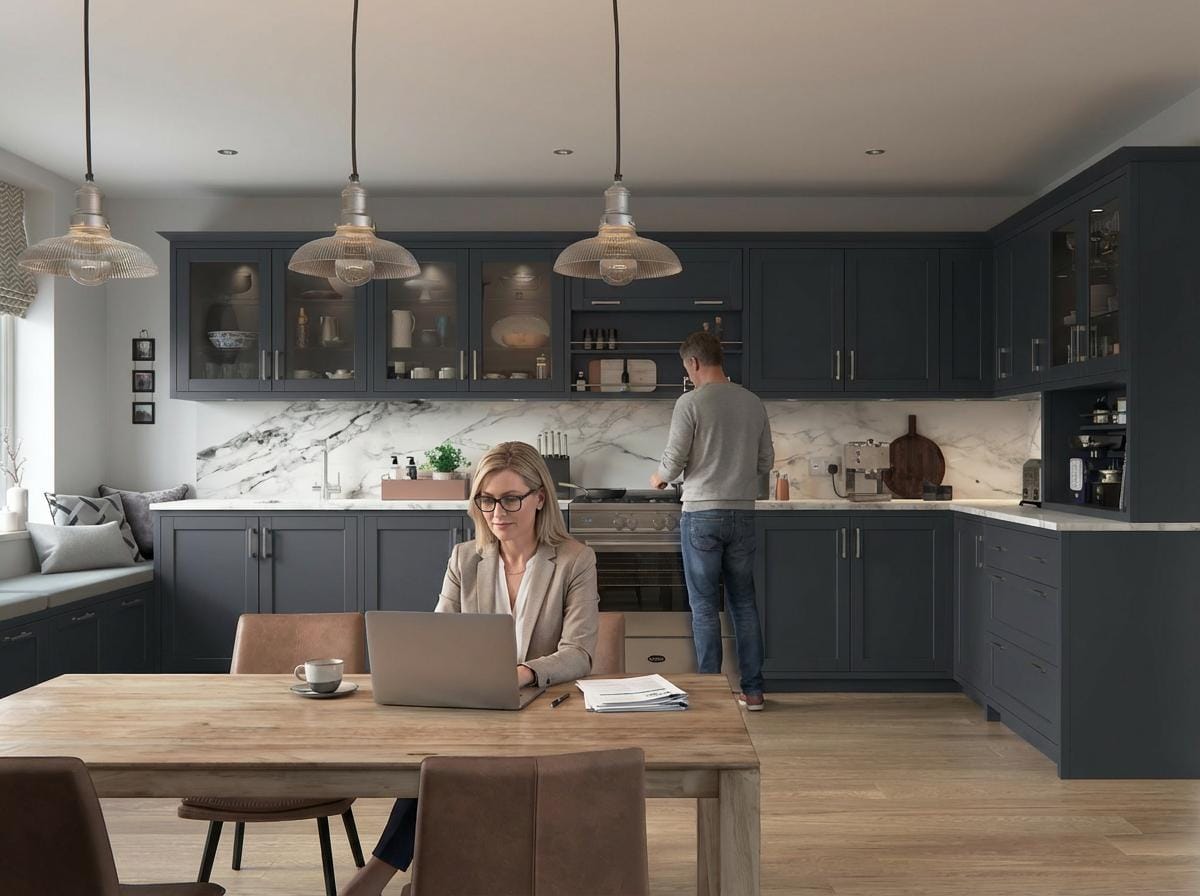
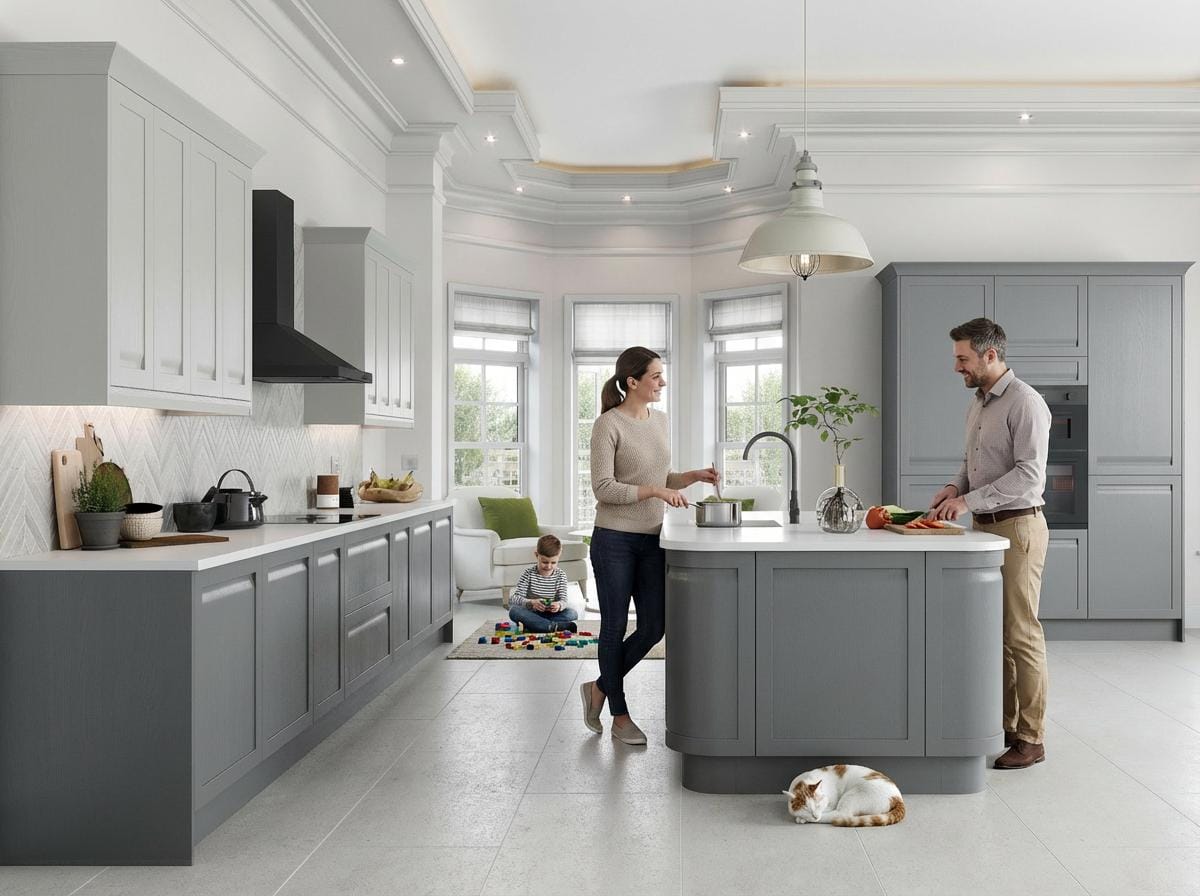
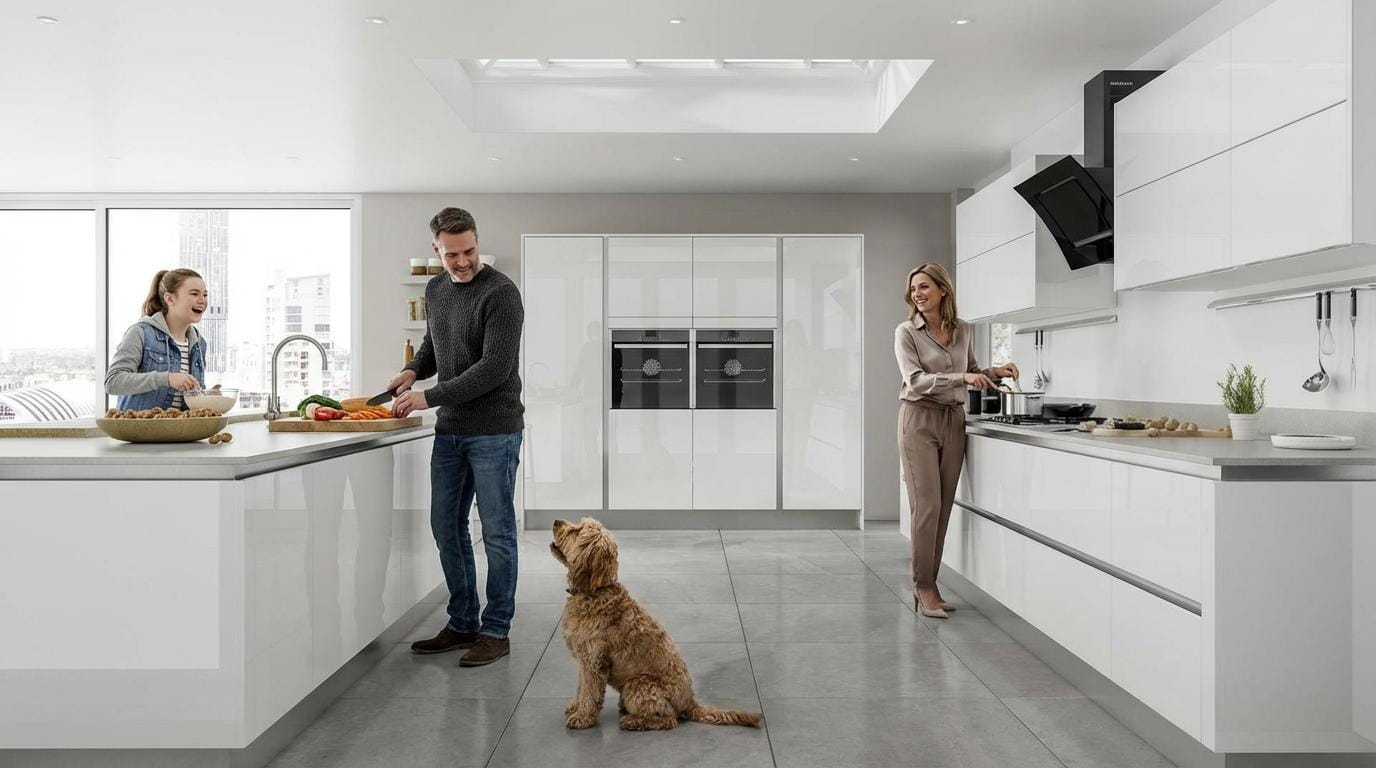
The most common mistake is an island that’s too large for the room. It sounds counterintuitive, because people usually want more worktop and more storage. But an island that leaves less than 900mm of clear circulation space on any side creates a kitchen that feels cramped and is awkward to work in, especially with more than one person.
As a working guide, you need at least 1,000mm of clearance on the sides where you’ll be opening appliance doors or moving between the island and the main run of units. On a quieter side, 900mm is workable. Less than that and you’ll feel it every day.
The right island size isn’t the largest one that physically fits. It’s the one that leaves the room feeling open and the workflow feeling easy
Proportion and height matter more than you might expect
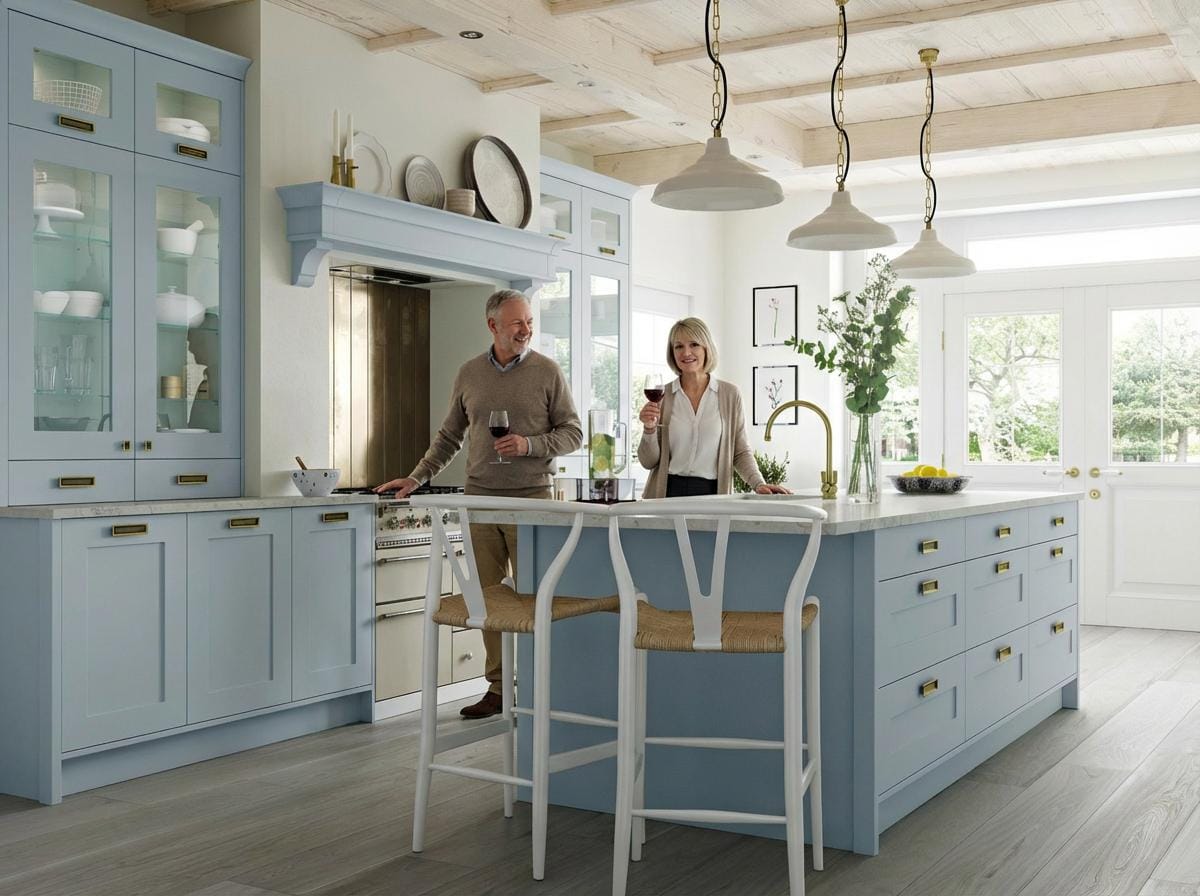
Most kitchen islands sit at standard worktop height, around 900mm. That works well if the island is primarily a prep and cooking surface. If you want seating at the island, you have a choice to make: raise part of the island to bar height, around 1,050mm, with tall stools, or keep it at worktop height with lower counter stools.
Both can work, but they suit different kitchens. A stepped island with a raised breakfast bar section can feel visually busy in a smaller room. A single-height island with the right stool height is often cleaner and easier to live with.
Proportion also applies to the island’s footprint relative to the room. A long, narrow island in a wide room can look awkward. A square or gently rectangular island can anchor a space better. These are the kinds of decisions that are worth working through on a proper plan before anything is ordered.
Storage inside the island deserves proper thought
An island is an opportunity to add a significant amount of storage, but only if it’s planned properly. Deep drawers are usually more useful than base cupboards on an island because you can see and reach everything without crouching. A combination of deep pan drawers, a dedicated cutlery drawer, and a couple of cupboard spaces for larger items can work well in practice.
If you’re planning to include a sink or hob in the island, that changes the storage layout considerably. A hob in the island needs extraction above it, which affects ceiling height requirements and the visual weight of the space. A sink in the island needs drainage routing through the floor, which is straightforward in a new build or full renovation but worth flagging early in an older property.
Open shelving on one end of an island can be a useful addition, particularly for cookbooks or everyday items you want within reach. Keep it edited, though. Open shelving that becomes a dumping ground does nothing for the room.
Worktop choice on an island is a different decision to the perimeter
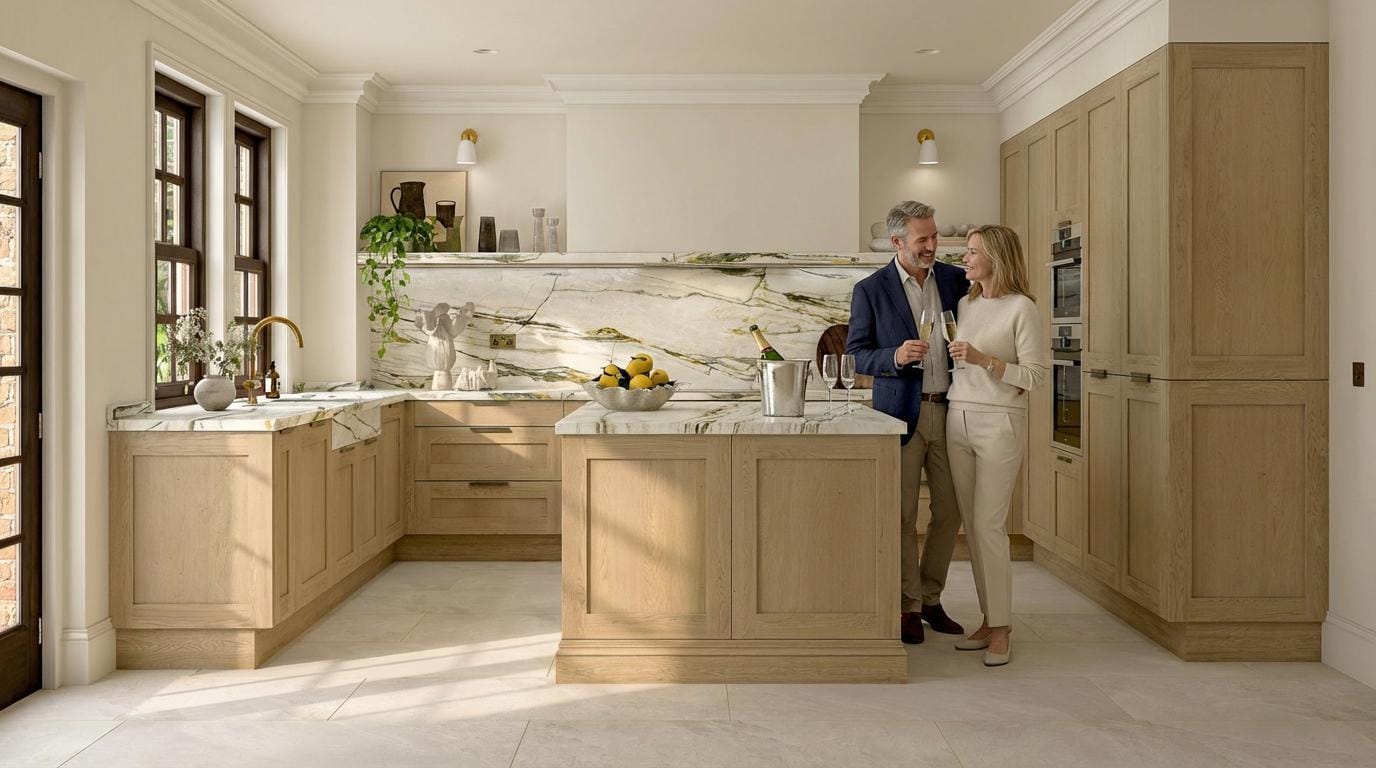
Many people choose a contrasting worktop material for their island, and there are good reasons to do so. It can help define the island visually, and it gives you the opportunity to use a material that suits the way you use that surface.
A honed or leathered stone surface on an island can be practical if you use it heavily for prep, as it can show less in the way of daily marks than a polished finish. Timber can work well on an island used primarily as a breakfast and casual dining surface, though it needs more maintenance than stone or quartz.
The key is to think about how you’ll actually use the island surface, not just how it will look in a photograph. A beautiful marble island that requires constant care and shows every water mark may not be the right choice if your kitchen is used hard every day

Lighting above an island needs to be positioned carefully
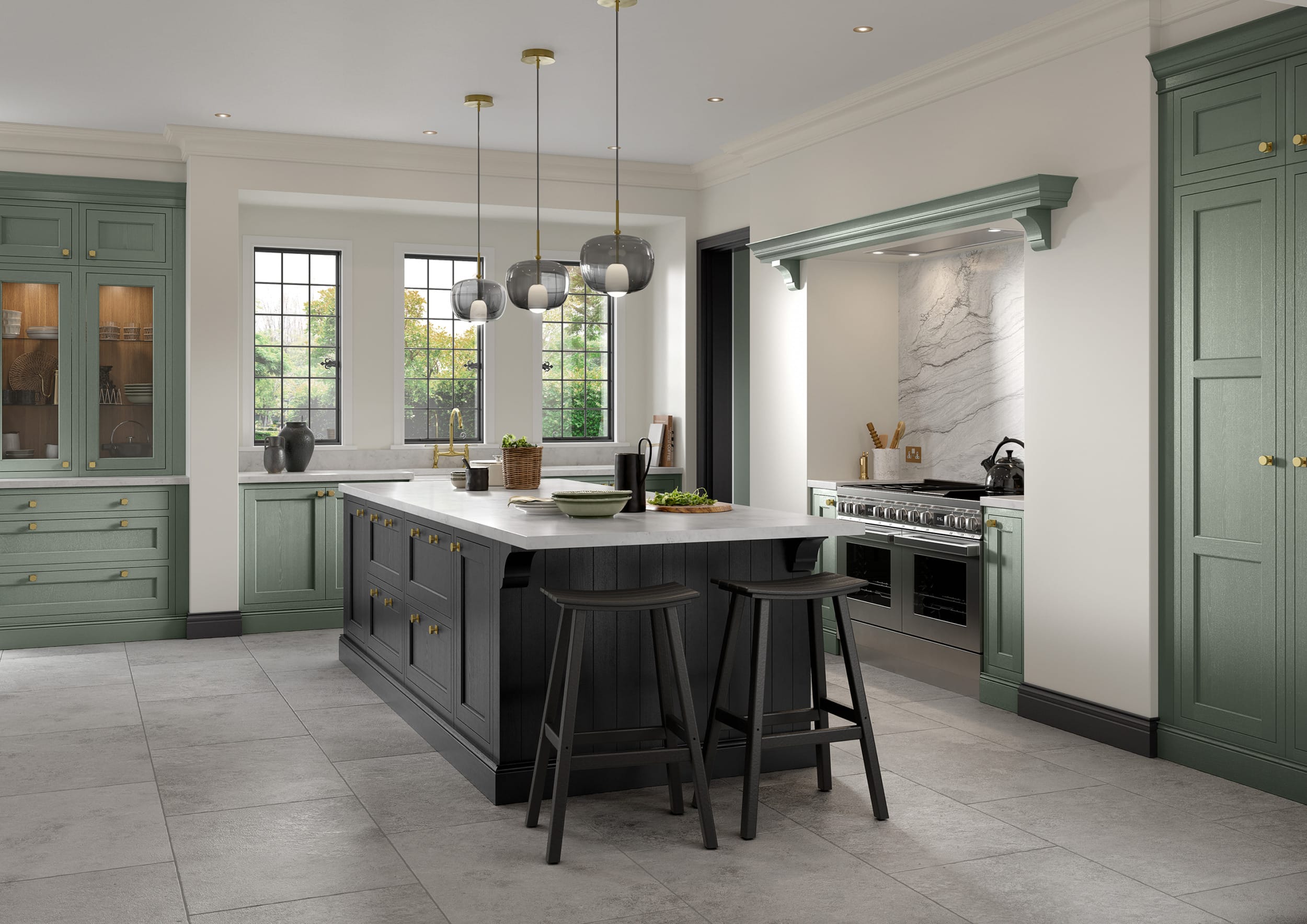
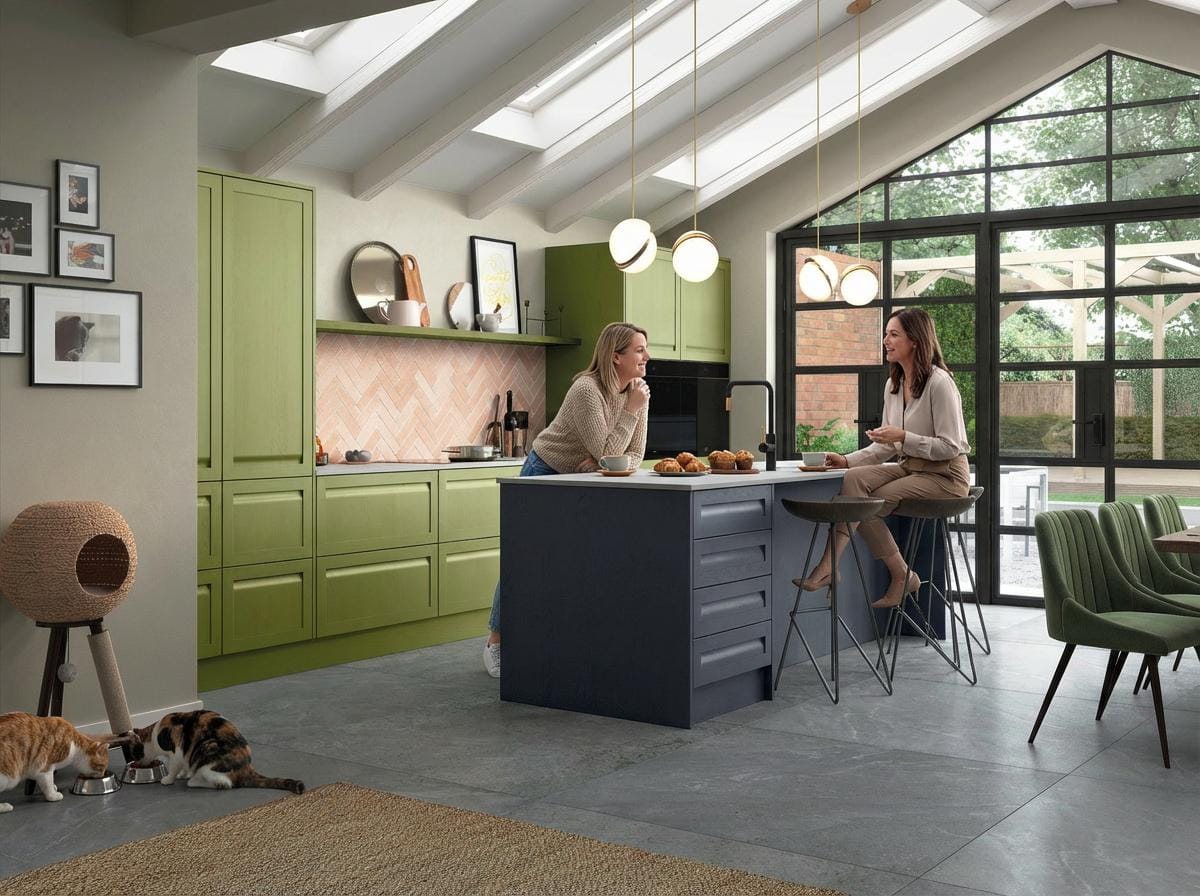
Pendant lights above an island are one of the most effective ways to define the space and add character to a kitchen. But the positioning matters. Pendants hung too high lose their effect and don’t light the worktop well. Hung too low, they interrupt sightlines and can feel oppressive.
As a rough guide, the bottom of a pendant should sit around 700 to 750mm above the worktop surface. That brings the light close enough to be effective and creates a sense of intimacy around the island without feeling cramped.
The number of pendants and their spacing should relate to the length of the island. A single pendant over a long island looks unbalanced. Two or three, evenly spaced, usually works better. Avoid pendants that are so decorative they compete with the cabinetry. The island itself should be the focus.
When an island isn’t the right answer
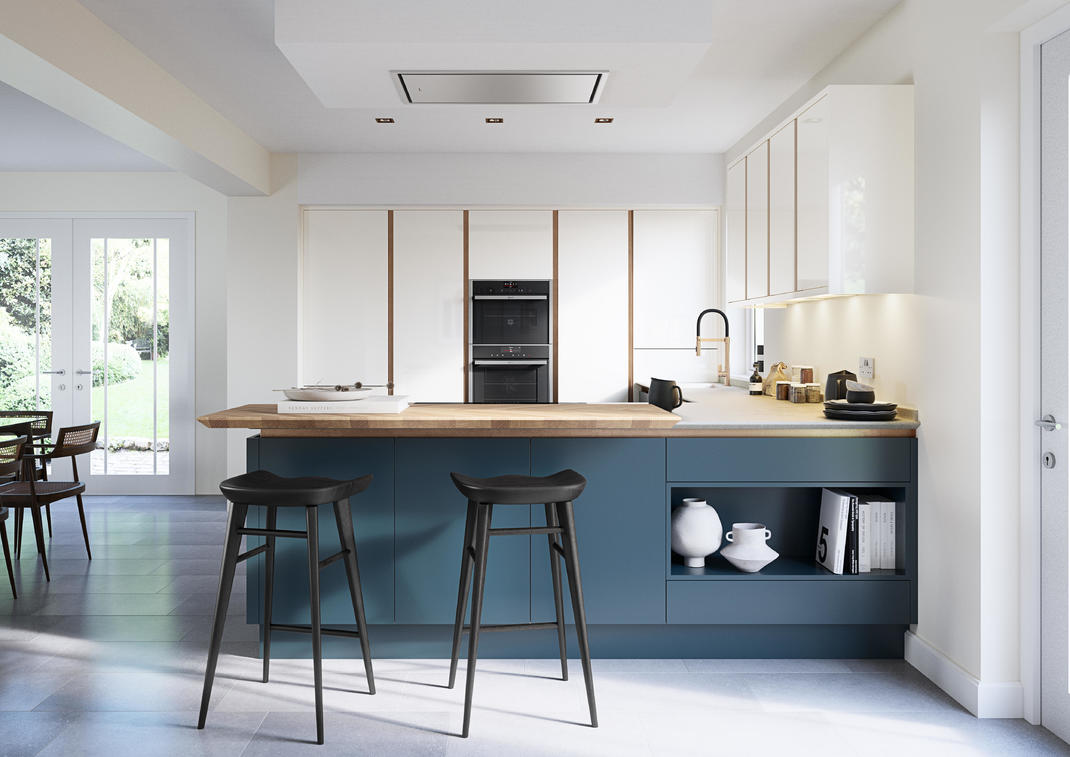
Not every kitchen benefits from an island. In a room under roughly 12 to 14 square metres, an island often creates more problems than it solves. A peninsula, which connects to the main run of units on one side, can give you much of the same benefit, including extra worktop, storage, and a seating overhang, without requiring the same amount of clear floor space.
A well-designed peninsula in a smaller kitchen will usually function better than a compromised island. It’s worth being honest about the room size and circulation before committing to a layout.
In some kitchens, particularly galley layouts or rooms with a strong linear character, the better solution is simply more well-considered cabinetry and a clear, uncluttered floor. An island is a tool, not a requirement

How Mastercraft approaches this
When we design a kitchen with an island, we start with the floor plan and the way you move through the space, not with the island itself. The island has to earn its place by improving the layout, not just filling it. That means working through circulation routes, appliance positions, and how the island relates to the rest of the cabinetry before we settle on a size or configuration.
We also think carefully about what the island needs to do. If it’s primarily a prep surface, the storage and worktop choice will reflect that. If it’s where the family gathers in the morning, the seating height and overhang become more important. These aren’t the same island, even if they look similar from a distance.
Every Mastercraft kitchen is designed around the specific room and the people using it. An island in one of our kitchens is a considered part of the overall layout, not a feature added because it’s expected. The result can be a kitchen that works as well as it looks, and continues to do so years after it’s installed.
Start your Mastercraft design consultation
You'll work directly with a Mastercraft designer to plan a kitchen around your home, your layout and how you live day to day. From the first sketches through to technical planning and installation, everything is handled by one experienced in-house team.
Designed around your home
Every kitchen is made-to-measure for your room, your architecture and the way you use the space.
Technical survey included
We measure and plan everything before production begins so your kitchen fits exactly as intended.
Materials and samples
See door finishes, worktops and colours in your own home before making final decisions.

Browse the Mastercraft design library
Inside you'll find our brochures, design guides, material references and any current Mastercraft offers. A practical starting point if you're thinking about a kitchen but not ready to talk yet.
Explore more from Mastercraft Kitchens
If you’re planning a kitchen project and would like to see more of our work, you can explore our designs across the North of England and beyond.
- fitted kitchens in Liverpool
- fitted kitchens in Manchester
- fitted kitchens in Harrogate
- fitted kitchens in Leeds
- fitted kitchens in Wirral
- bespoke kitchens in Yorkshire
If you’d like to talk through your kitchen layout and whether an island is the right choice for your space, we’d be glad to arrange a design consultation. Get in touch and we can start from the beginning.
Frequently asked questions
How much space do I need around a kitchen island?
You need at least 900mm of clear floor space on any side of the island, and ideally 1,000mm or more on sides where you’ll be opening appliance doors or moving between the island and the main units. Less than this and the kitchen will feel tight to work in, particularly with more than one person in the room.
Should the island worktop match the rest of the kitchen?
It doesn’t have to, and many well-designed kitchens use a contrasting material on the island to help define it within the space. The more important question is whether the material suits how you’ll use that surface. A heavily used prep island and a casual breakfast surface have different practical requirements, and the worktop choice should reflect that.
Can I put a hob or sink in my kitchen island?
Yes, but both require early planning. A hob in the island needs extraction above it, which affects ceiling height and the visual character of the room. A sink needs drainage routed through the floor, which is straightforward in most renovations but worth confirming with your designer before the layout is finalised.
What height should kitchen island stools be?
It depends on the island height. For a standard worktop height of around 900mm, counter stools with a seat height of roughly 600 to 650mm work well. If you have a raised bar section at around 1,050mm, you’ll need taller bar stools with a seat height of around 700 to 750mm. Always check the specific stool dimensions against your island before ordering.
Is a peninsula a better option than an island in a smaller kitchen?
Often, yes. A peninsula connects to the main run of units on one side, so it requires less clear floor space than a freestanding island. It can still provide extra worktop, storage, and a seating overhang, and in a room under around 12 to 14 square metres it will usually function more comfortably than an island that leaves too little circulation space.