Handleless kitchens are one of the most consistently requested styles we work with, and that hasn’t changed going into 2026. But popularity alone isn’t a reason to choose a particular approach for your kitchen. The more useful question is whether it suits your space, your lifestyle, and the way you actually want the room to feel.
What a handleless kitchen actually means
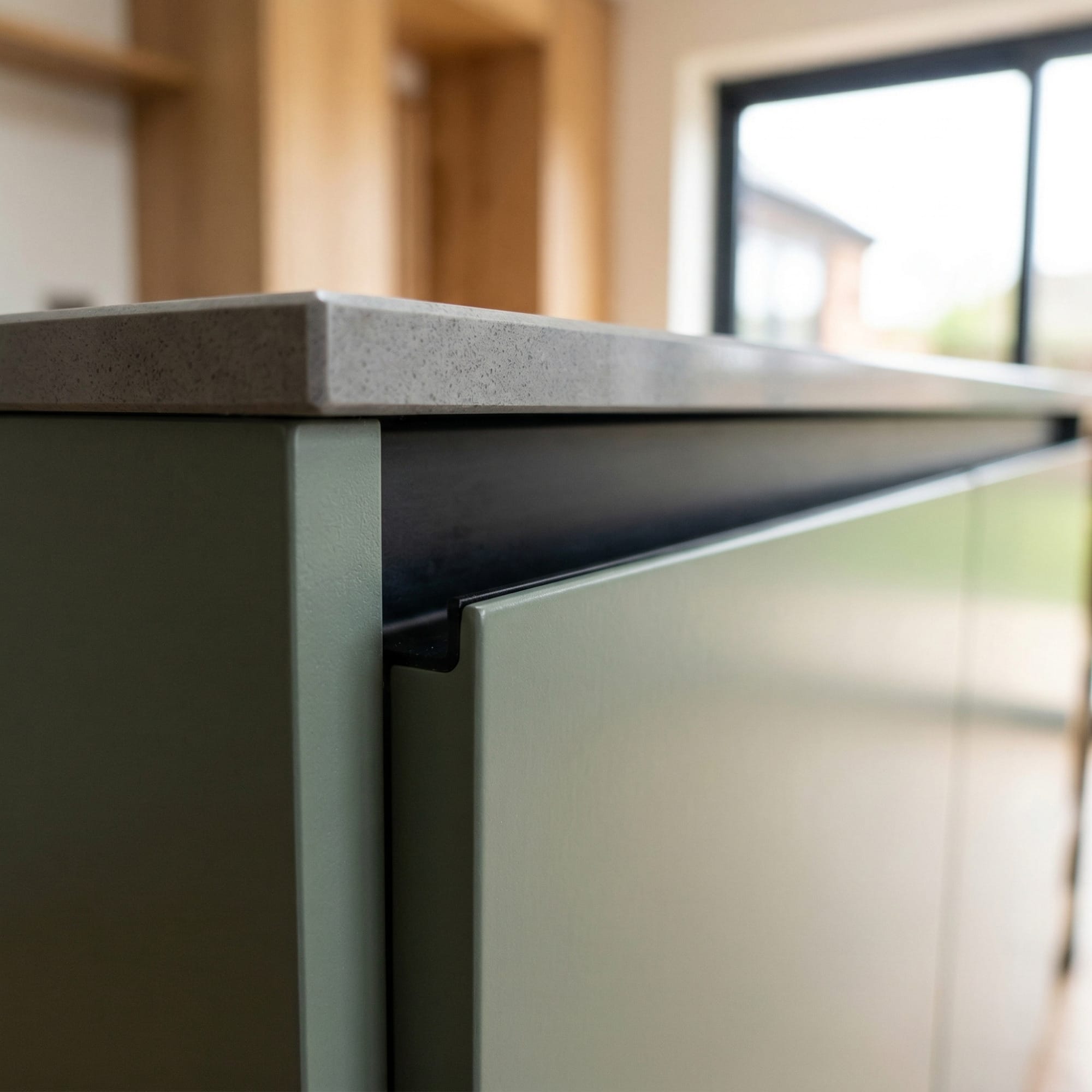
The term covers more than one thing, which is worth clarifying before you go too far down the planning route. A true handleless kitchen typically uses a recessed J-pull or L-profile along the top or side of a door, so your fingers grip the cabinet itself rather than a separate handle. A groove-pull or push-to-open system is a different thing again, and each approach has its own practical implications.
The distinction matters because it affects the look in use, the cleaning demands, and how the door sits on the cabinet. A J-pull in a painted door will wear differently over time compared to one routed into a lacquered finish. If you’re going bespoke, these details should be part of the conversation early.
The case for going handleless
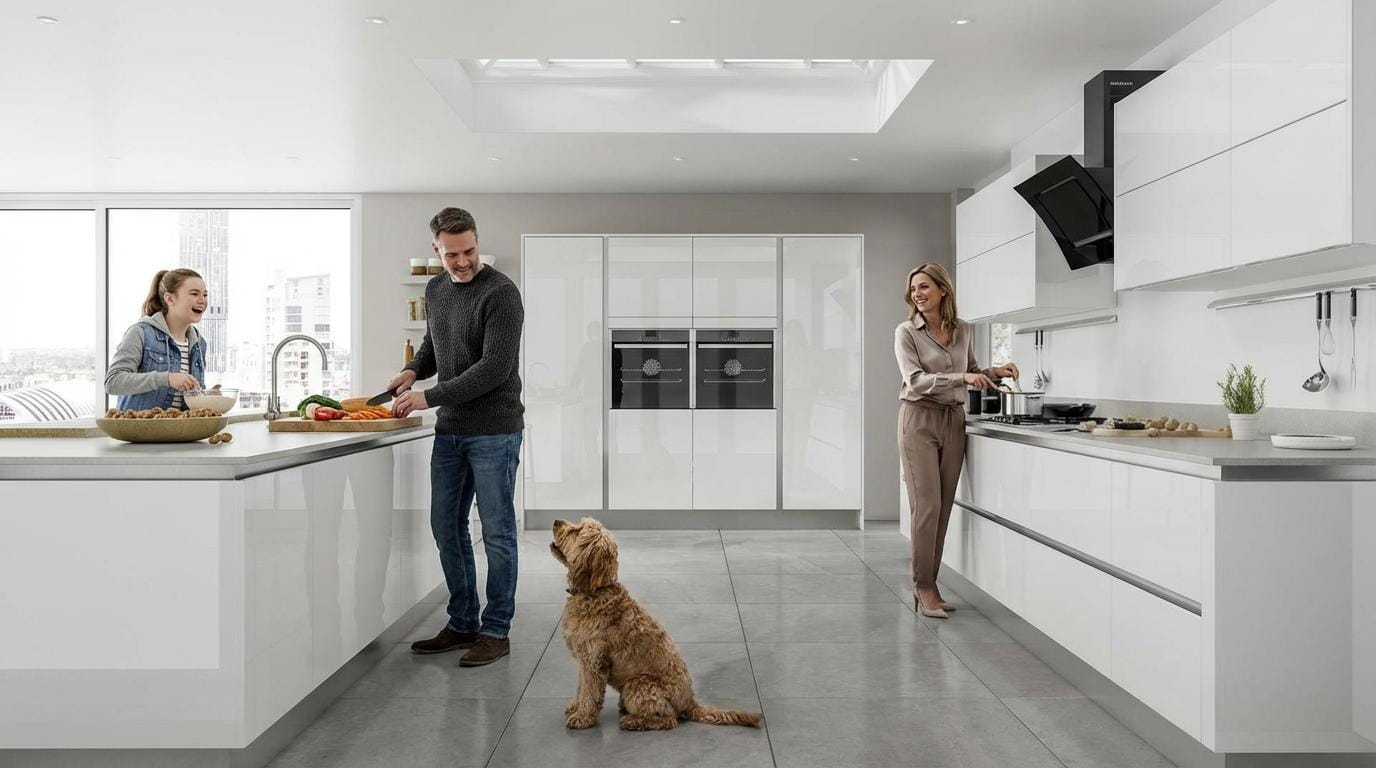
The appeal is largely about visual calm. Without handles, the eye travels across a run of cabinetry without interruption, which can make a space feel more considered and less busy. In a kitchen-diner or open-plan layout, that continuity carries real weight.
Handleless designs also work well where wall space is limited. In a galley kitchen, for instance, you avoid the situation of catching your hip on a protruding handle every time you pass. It’s a practical gain as much as an aesthetic one.
For people who want a kitchen that sits closer to a piece of furniture than a fitted unit, the handleless approach can help achieve that. The surface reads as more solid, more architectural. That said, it only works if the rest of the design holds up to the same standard.
Where handleless designs can fall short
The most common issue is wear to the grip area. With a J-pull, the inside edge of the routed profile is touched every time the door or drawer is opened. Over years of daily use, the finish in that zone takes more punishment than anywhere else on the cabinet. How well it holds depends entirely on the quality of the material and the paint or lacquer used.
There’s also a sensory element that some people underestimate. A bar handle gives you something to grip positively. A J-pull is more of a guide than a handle. For anyone with reduced grip strength or arthritis, this can be a genuine consideration, not a minor one.
Cleaning is another point worth thinking through. Recessed profiles collect grease and dust in a way that flat handles don’t. The area behind a J-pull is harder to wipe down than a simple bar handle fixed proud of the door. It’s manageable, but it’s not nothing.
How handleless kitchens work with different layouts
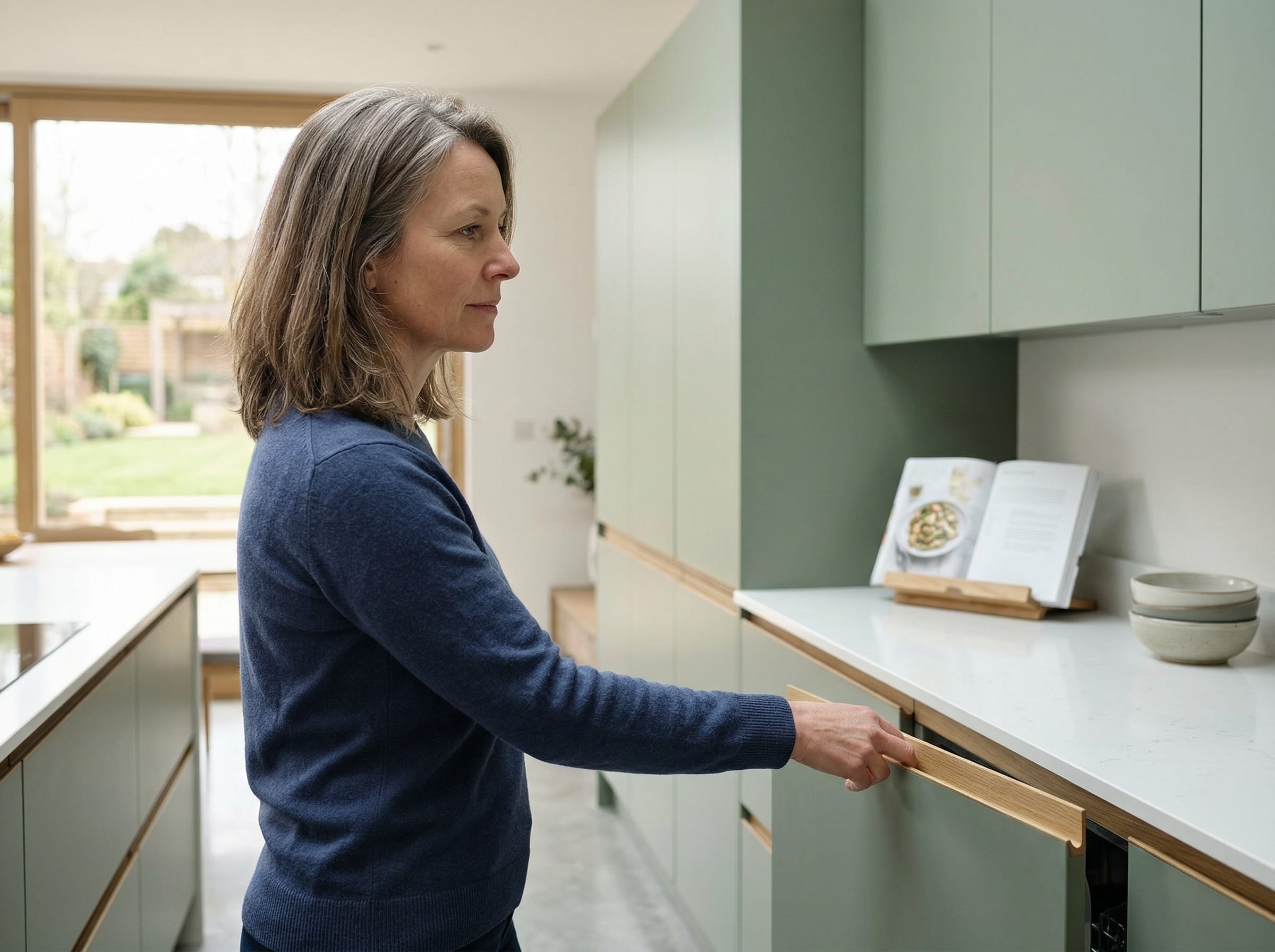
Layout has a significant effect on whether handleless design works well. In a large open-plan kitchen, the clean lines read beautifully from a distance, and the absence of hardware lets the material choices carry the room. In a smaller, more enclosed kitchen, the same approach can feel a little austere if the rest of the design isn’t warm enough to balance it.
Islands are a particular case. A handleless island looks sharp, but if the overhang isn’t generous enough, people end up gripping the worktop edge to pull out drawers from a seated position. Good proportion matters here.
Handleless cabinetry also benefits from strong vertical lines. Where a traditional shaker door with a handle reads well in almost any proportion, a flat handleless door needs to be the right height and width to look deliberate rather than blank. Your designer should be thinking about this, not just the door style in isolation.
Mixing handleless with traditional elements
One of the more interesting directions in 2026 is the move away from fully handleless kitchens towards selective use of the approach. You might see handleless base units paired with a more textured or framed upper cabinet, or a handleless island sitting alongside a freestanding dresser-style piece with cup handles.
This kind of mixing requires confidence in the design, but it can produce a kitchen that feels less like a catalogue page and more like a room. The key is that the two elements need to be held together by something, whether that’s a consistent colour, a shared worktop material, or a repeated detail in the joinery.
If you’re drawn to handleless but find fully handleless rooms a little cold, this is a direction worth exploring. It’s a more considered route, and it tends to age better.
Materials and finishes that suit the handleless approach
Handleless design puts more emphasis on the door material itself because there’s less visual detail to draw the eye. A painted shaker door relies on the moulding and the handle to carry the look. A flat handleless door has to earn its place through the finish, the colour, and the way it interacts with the light.
High-gloss lacquer was the dominant choice for handleless kitchens for a long time, and it still has its place. But matt lacquer and textured laminates have become far more popular, partly because they show fingerprints less and partly because the softer finish feels more at home in a domestic space.
Veneer and timber-effect finishes work well too, particularly in a handleless format, where the grain can run cleanly across a full run of cabinetry without being interrupted. This is one area where the lack of hardware actually adds something, letting the material breathe across the surface.
How Mastercraft approaches this
When someone comes to us interested in a handleless kitchen, the first thing we want to understand is what’s drawing them to it. Is it the clean look? A specific material they’ve seen? A practical need to avoid protruding hardware in a tight space? The answer shapes the direction.
We don’t treat handleless as a style category to be ticked off. We think about how the profile will behave in the specific material chosen, how the doors will read in the particular light conditions of your room, and whether the proportions of the layout will support the approach. A handleless kitchen designed without that level of thought can end up looking flat rather than refined.
Every kitchen we design is a considered response to a specific space and a specific brief. Whether you end up with a fully handleless design, a mixed approach, or something else entirely, the decision should come from the design process, not from what’s popular at a given moment.
Start your Mastercraft design consultation
You'll work directly with a Mastercraft designer to plan a kitchen around your home, your layout and how you live day to day. From the first sketches through to technical planning and installation, everything is handled by one experienced in-house team.
Designed around your home
Every kitchen is made-to-measure for your room, your architecture and the way you use the space.
Technical survey included
We measure and plan everything before production begins so your kitchen fits exactly as intended.
Materials and samples
See door finishes, worktops and colours in your own home before making final decisions.

Browse the Mastercraft design library
Inside you'll find our brochures, design guides, material references and any current Mastercraft offers. A practical starting point if you're thinking about a kitchen but not ready to talk yet.
Explore more from Mastercraft Kitchens
If you’re planning a kitchen project, you can find out more about what we do across the North of England and Yorkshire:
- Fitted kitchens in Liverpool
- Fitted kitchens in Manchester
- Fitted kitchens in Buckley
- Fitted kitchens in Leeds
- Fitted kitchens in Windsor
- Bespoke kitchens in Yorkshire
If you’re at the stage of thinking seriously about your kitchen, we’d be glad to arrange a design consultation. It’s a straightforward conversation about your space, your priorities, and what’s genuinely possible within your project.
Frequently asked questions
Do handleless kitchens cost more than kitchens with traditional handles?
Not necessarily, though it depends on the profile type and the door material. A routed J-pull requires more precise manufacturing than a simple drilled hole for a bar handle, which can add a small cost at the cabinetry stage. That said, you save on hardware, and the overall price difference is rarely significant in a bespoke project where the quality of the carcass and finish matters more than the handle style.
Are handleless kitchens practical for families with young children?
They can be, with a few caveats. Young children often find J-pull profiles less intuitive to open than a visible handle, which some families find useful for keeping certain drawers off-limits. On the other hand, small fingers can catch in recessed profiles. Push-to-open mechanisms are worth considering in this context, as they eliminate the grip point entirely.
How do handleless kitchens hold up over time?
The main area of wear is the inside of the grip profile, which takes daily contact. The durability depends heavily on the finish used. A high-quality matt lacquer or a hard laminate will hold up well; a cheaper painted finish will show wear more quickly in that zone. Specifying the right material for your usage level is part of what a good design consultation should address.
Can I combine handleless cabinetry with a more traditional kitchen style?
Yes, and done well it can produce a more interesting result than a fully handleless or fully traditional approach. The most important thing is that the two elements are tied together by a common colour, material, or design detail. Without that, the combination can look unresolved rather than intentional.
Is a handleless kitchen harder to keep clean?
The recessed profile of a J-pull does collect grease and dust more readily than a bar handle, so there’s a small additional cleaning task involved. The door faces themselves are no harder to wipe down. If ease of cleaning is a priority, a push-to-open or tip-on mechanism removes the recessed profile entirely, though both come with their own considerations around everyday use.