Wood is appearing in more kitchen designs than it has for a long time, and the reasons go beyond fashion. Used well, it brings warmth, texture, and a sense of craft that painted finishes and laminates simply cannot replicate. But wood rewards careful thinking, and it repays poor decisions just as reliably.
Why wood is worth considering seriously right now
There’s a growing fatigue with kitchens that feel too clinical. All-white, handleless, high-gloss designs had their moment, and while they still work in the right space, many people are looking for something with more presence and material warmth. Wood answers that instinct well.
Beyond aesthetics, there’s a genuine interest in kitchens that feel built to last rather than built to photograph. Solid timber and quality veneers age in a way that feels honest. They mark, they mellow, and over time they often look better than they did when new. That’s a different proposition from a surface that chips and cannot be repaired.
The shift is also practical. Better finishing technology means wood cabinetry is more durable and easier to maintain than it was ten or fifteen years ago. That removes one of the most common objections people raise when they consider it.
The difference between wood as a feature and wood as a finish
One of the more important decisions you’ll make is whether you want wood to be the dominant material in the kitchen or whether you want it to play a supporting role. Both are valid, but they lead to very different outcomes and require different planning.
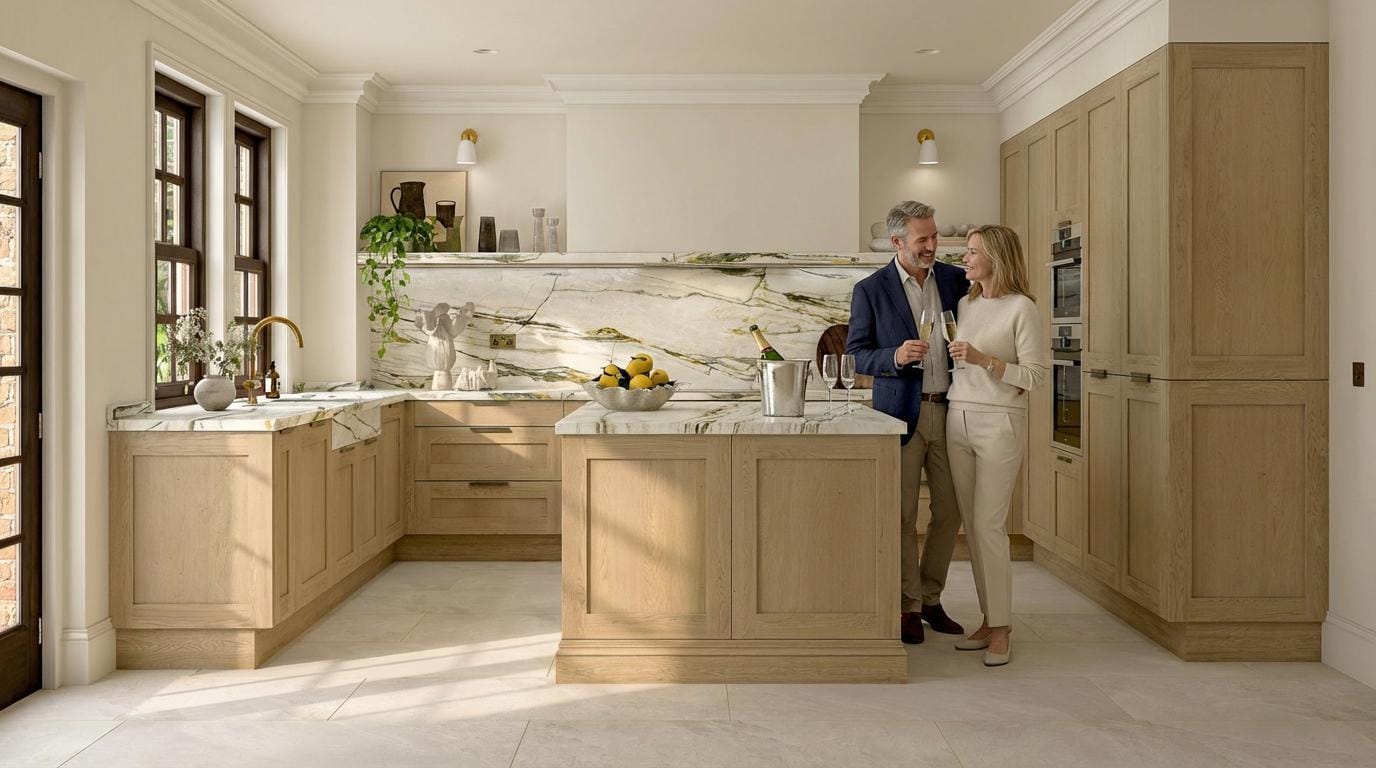
A kitchen built almost entirely from one timber species, with matching cabinetry, open shelving, and perhaps a timber ceiling or floor, is a strong commitment. It can feel cohesive and architectural when the proportions are right. But it also narrows your choices in other areas, because too much competing texture or colour will fight against it.
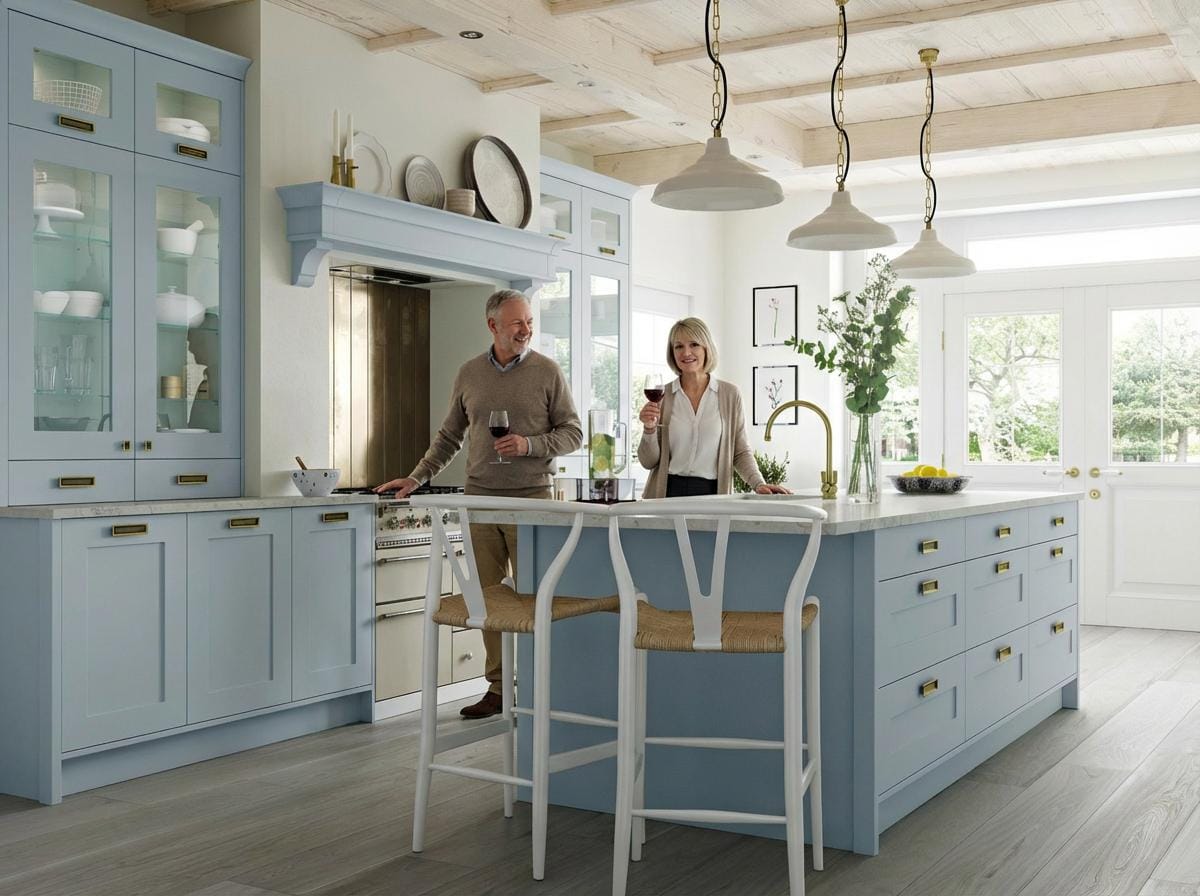
Using wood selectively, as an island in a contrasting colour, as open shelving against painted cabinetry, or as a warming element in an otherwise neutral scheme, tends to be easier to get right. It gives you something to look at without the design becoming one-note.
Choosing the right species for your kitchen
Not all timbers behave the same way in a kitchen environment. Temperature changes, moisture, and the general wear of daily life affect different species differently, and your choice should reflect how the room actually gets used.
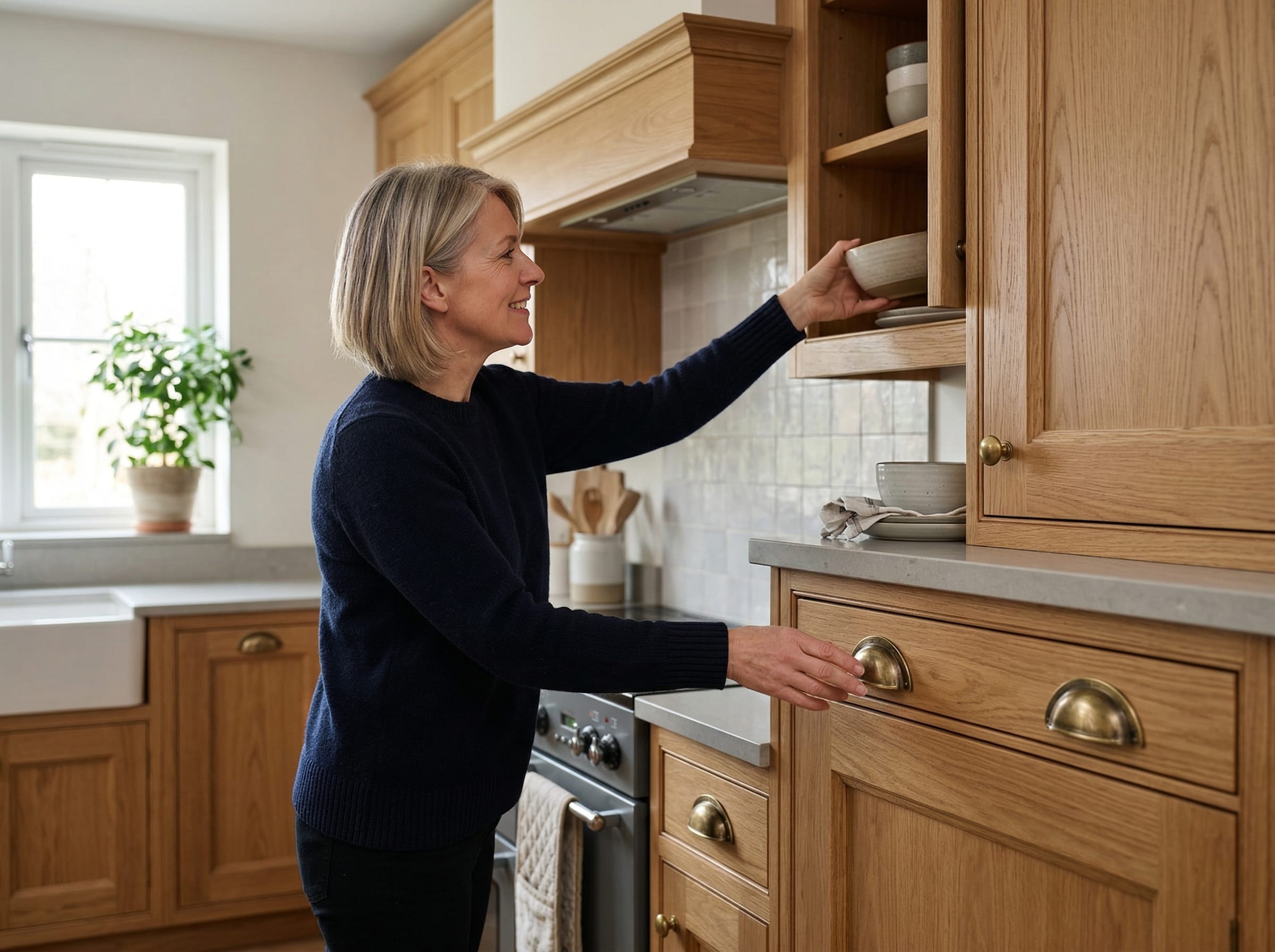
Oak is the most widely used for good reason. It’s stable, takes a range of finishes well, and ages gracefully. Whether you choose European oak for a cleaner, more contemporary grain or American white oak for slightly more pronounced figuring, it’s a reliable foundation for a kitchen that needs to perform.
Walnut is darker and richer, and it suits kitchens where you want depth rather than warmth. It pairs well with stone worktops and works particularly well in rooms that don’t receive a great deal of natural light. Ash and sycamore offer lighter, more neutral tones if you want the texture of real timber without the warmth that oak brings.
Avoid very pale or very porous timbers in high-traffic areas around the sink and hob unless they’ve been finished thoroughly. The grain will hold oil, grease, and water staining more readily, and that becomes frustrating to manage over time.
How to handle the worktop question
Pairing a wood-heavy kitchen with the right worktop is one of the more consequential decisions in the design. The worktop sits at the visual centre of the kitchen, and it either reinforces what the timber is doing or it works against it.
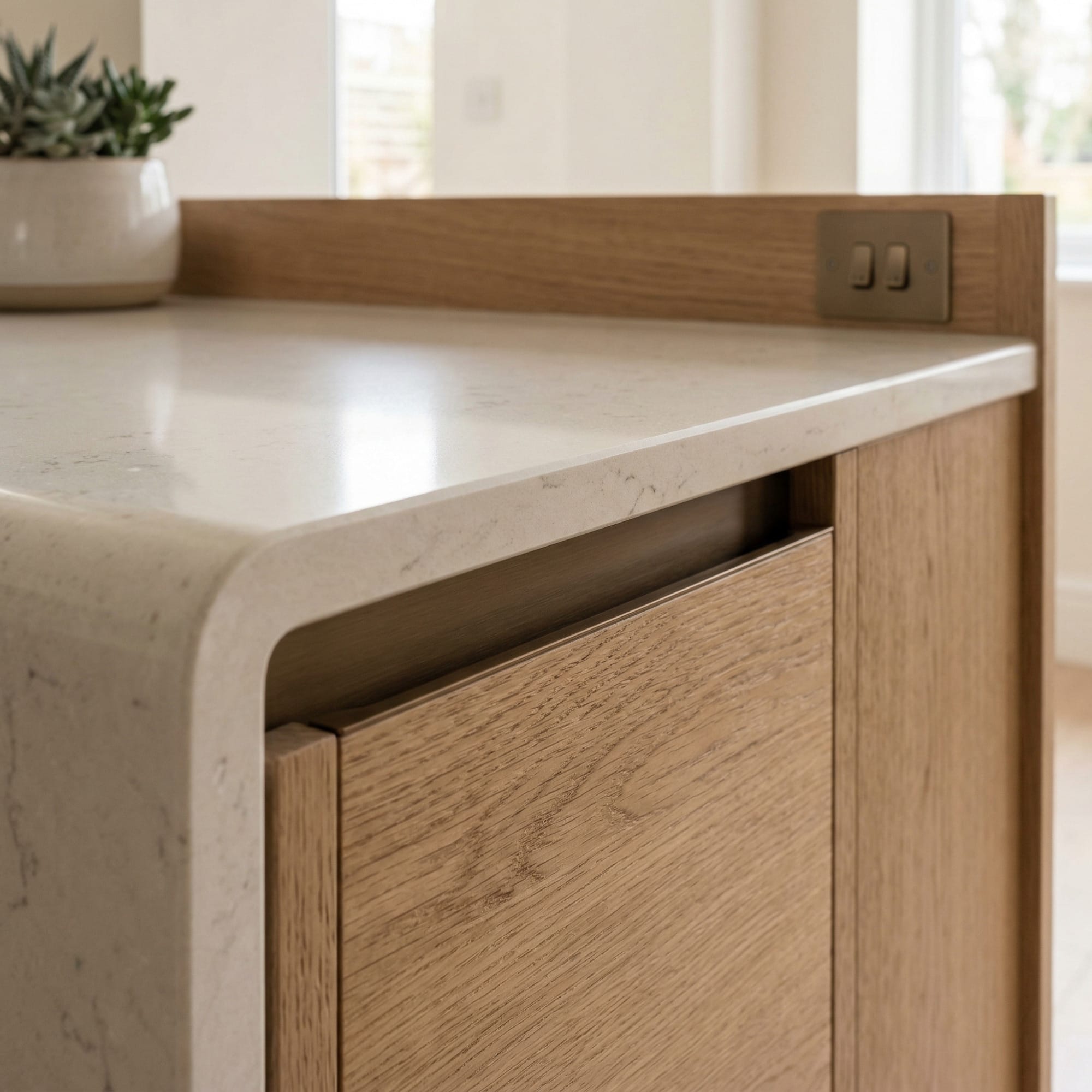
Stone is the most common choice, and for good reason. A matte or honed finish in a warm grey, off-white, or pale stone colour tends to sit quietly alongside wood without competing. Highly polished or very dark stone can feel at odds with the natural grain of timber, though there are exceptions when the room has strong architectural bones to hold the contrast together.
A timber worktop on a timber kitchen is a choice that requires careful thought. If you go species-matched, it can feel heavy unless the rest of the room has enough contrast. A different species or finish, perhaps an oiled oak worktop against walnut cabinetry, can work well because there’s a material connection without everything becoming the same.
Composite and sintered stone worktops are a reasonable practical choice if you want the look of stone with slightly better durability around the sink. Just make sure the tone works with the warmth of the wood rather than cooling the scheme down too much.
Getting the grain and finish right
The way timber is cut and finished changes the character of the material considerably, and it’s worth understanding before you specify anything.
Rift-cut and quarter-sawn timbers produce a tighter, more linear grain. They’re well suited to contemporary or in-frame designs where you want the wood to read cleanly rather than expressively. Crown-cut timber shows a broader, more flowing grain pattern that can look beautiful but also more traditional.
For finishes, a hardwax oil gives the timber a natural, matte appearance and is easy to maintain and repair in place. A lacquer provides more surface protection but can look more plastic over time. Painted timber in a kitchen, while technically not showing the grain, still benefits from the structural properties of solid wood or good-quality MDF, and the paint finish should be specified properly for kitchen use rather than standard interior paint.
If you’re looking at a natural, unsealed finish anywhere, be realistic about the level of maintenance you’re willing to commit to. Oiled timber needs re-oiling periodically. That’s not a burden for everyone, but it’s worth knowing before you commit.
Mixing wood with other materials without losing coherence
A well-resolved kitchen design usually involves more than one material, and the way wood sits alongside everything else is what separates a considered scheme from one that feels accidental.
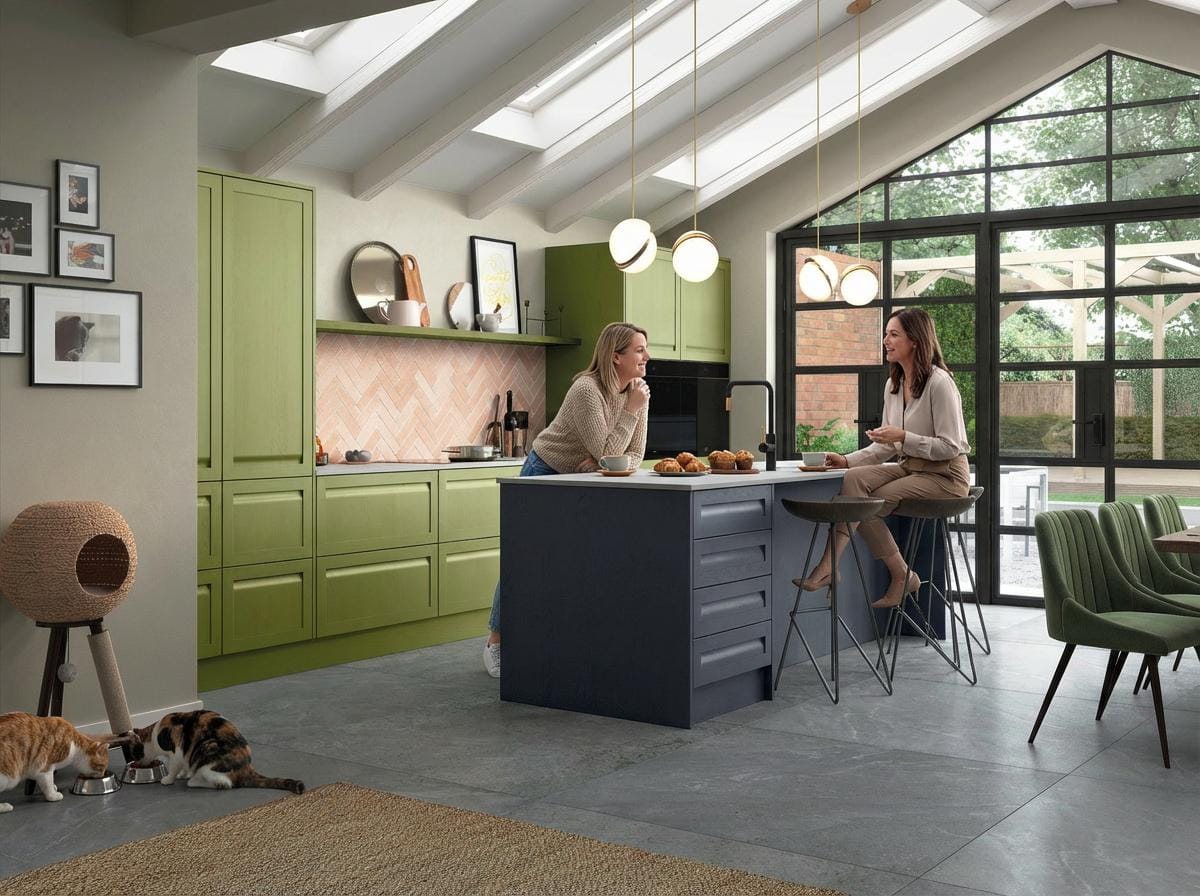
Painted cabinetry in a neutral tone is the most common pairing, and it works because it lets the wood read clearly without competing. If the painted element is the base cabinetry and the wood is the island or the upper section, the visual weight of the room splits in a natural way.
Metal, particularly unlacquered brass, brushed nickel, or aged bronze in hardware and lighting, tends to complement warm-toned timbers well. Chrome or bright stainless can feel at odds unless the design is leaning towards a more industrial or contemporary resolution.
Floor choice matters more than people often realise. A strong timber floor competing with timber cabinetry usually needs careful management. If both are present, they should be tonally close or clearly contrasting. A mid-tone oak floor fighting a mid-tone oak cabinet is the most common place where wood kitchens go slightly wrong.
How Mastercraft approaches this
When we’re working on a kitchen that incorporates wood, we start by asking what role the material is genuinely being asked to play. Is it providing warmth in a room that might otherwise feel cold? Is it adding texture to a predominantly neutral scheme? Or is the timber itself the design statement, with everything else supporting it? The answer shapes every subsequent decision, from species and cut to the way the cabinetry is detailed.
We don’t specify timber as a gesture or as a trend response. Every piece of wood in a Mastercraft kitchen has been chosen for a reason, whether that’s the way a particular grain pattern works with the proportions of a door, or the way a specific finish will age with the life of the room. That means we spend time looking at actual samples in the actual space, under the actual light, rather than making decisions from swatches in a studio.
The kitchens we design with timber tend to be the ones that our customers are still proud of ten years later. That’s because the material decisions were grounded in how the kitchen works and how it will be used, not just in how it photographs at the point of installation.
Start your Mastercraft design consultation
You'll work directly with a Mastercraft designer to plan a kitchen around your home, your layout and how you live day to day. From the first sketches through to technical planning and installation, everything is handled by one experienced in-house team.
Designed around your home
Every kitchen is made-to-measure for your room, your architecture and the way you use the space.
Technical survey included
We measure and plan everything before production begins so your kitchen fits exactly as intended.
Materials and samples
See door finishes, worktops and colours in your own home before making final decisions.

Browse the Mastercraft design library
Inside you'll find our brochures, design guides, material references and any current Mastercraft offers. A practical starting point if you're thinking about a kitchen but not ready to talk yet.
Explore more from Mastercraft Kitchens
If you’re planning a kitchen project, you can find more about our work across the UK here:
- Fitted kitchens in Liverpool
- Fitted kitchens in Manchester
- Fitted kitchens in Harrogate
- Fitted kitchens in Leeds
- Fitted kitchens in Southport
- Bespoke kitchens in Yorkshire
If you’re thinking about incorporating wood into your kitchen and want to talk through how it might work in your specific space, we’d be glad to arrange a design consultation at a time that suits you.
Frequently asked questions
Is real wood practical for a busy family kitchen?
Yes, provided you choose the right species and finish. Oak with a hardwax oil finish, for example, is durable, easy to spot-repair, and handles the demands of daily family life well. The key is being realistic about maintenance and avoiding very pale or porous timbers in the highest-wear areas around the sink.
How do I stop a wood kitchen from feeling too heavy or dated?
Balance is everything. If the cabinetry is predominantly timber, the worktop, floor, and walls need to provide contrast and breathing space. Mixing wood with a painted element, keeping the colour palette otherwise neutral, and choosing hardware carefully will stop the scheme from tipping into something that feels oppressive or old-fashioned.
What’s the difference between solid wood and veneer cabinetry?
Solid timber doors have the advantage of being sandable and refinishable over time, which extends their lifespan considerably. A quality veneer over a stable substrate can look just as good and is often more dimensionally stable in a kitchen environment. The right choice depends on your budget, your priorities, and the style of door you’re specifying.
Can I mix different wood species in the same kitchen?
You can, but it requires care. The most successful mixed-timber kitchens tend to keep one species dominant and introduce the second as a clear accent, such as a walnut island in an oak kitchen. Mixing species that are tonally very similar without any clear contrast tends to look accidental rather than designed.
How should I light a wood kitchen to make the most of the material?
Warm white lighting in the 2700K to 3000K range suits timber well and brings out the richness of the grain without making the room feel flat. Natural daylight is the best test of how a timber finish will actually look in your space, which is why it’s worth viewing samples in the room itself rather than under showroom lighting.